

Businesses pay the energy bill first, then absorb rising costs through tighter margins or pass some of the burden into prices. Future-proofing business against rising energy costs means reducing avoidable consumption and managing when and how electricity is used; energy-efficiency upgrades can reduce business energy use by 20-40%.
Higher energy bills put pressure on budgets, but businesses do not have to respond by cutting essential operations. An energy-use audit can show where electricity goes. Efficiency improvements, onsite solar generation and battery storage can then help reduce grid reliance and exposure to fossil-fuel price volatility.
This article explains how businesses in Pakistan can assess energy use, prioritise efficiency measures and evaluate solar paired with storage. Operating patterns, daytime demand and the value of using stored electricity after sunset all shape the decision. Focus on measures that suit your site rather than adopting a one-size-fits-all approach.
Key Takeaways
- Identify where energy is being used before choosing upgrades, then prioritise changes that reduce avoidable consumption.
- Assess whether battery storage can shift excess solar electricity to periods when your business needs power.
- Understand how international fossil-fuel price volatility can affect business energy exposure and operating decisions.
- Use an energy-use audit to examine equipment, operating schedules and persistent loads that may be driving demand.
- Explore how Nippon Energy’s solar panels, battery storage systems and project development and EPC can support a business solar plan.
1. Energy efficiency as a competitive advantage
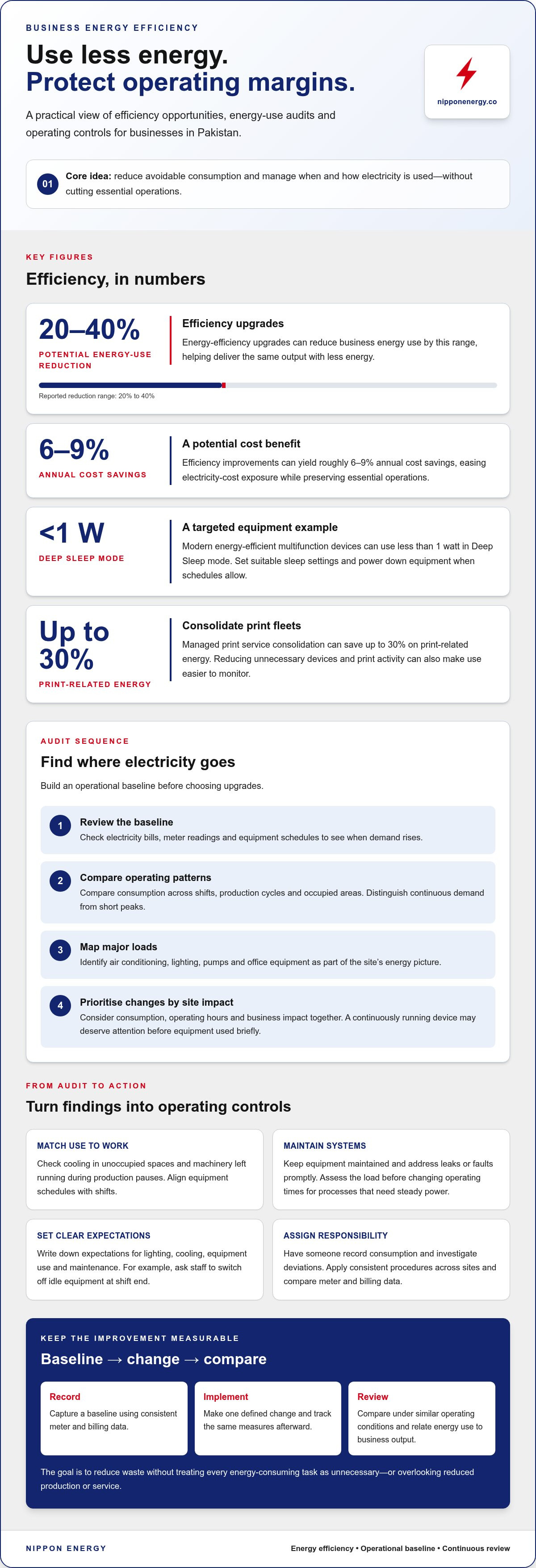
Energy-efficiency upgrades can reduce business energy use by 20-40%. They can also yield roughly 6-9% annual cost savings. For businesses in Pakistan, lower consumption can ease exposure to electricity costs while preserving essential operations. The competitive benefit comes from using less energy to deliver the same output. That can protect operating margins and support more sustainable business practices.
Start with an operational baseline. Review electricity bills, meter readings and equipment schedules to identify when demand rises. Compare consumption across shifts, production cycles and occupied areas, then map major loads such as air conditioning, lighting, pumps and office equipment. This distinguishes continuous demand from short peaks and gives managers a basis for prioritising upgrades.
Energy-efficient multifunction devices offer a targeted example. Modern devices can use less than 1 watt in Deep Sleep mode. Set suitable sleep settings and power down equipment when work schedules allow. For print fleets, managed print service consolidation can save up to 30% on print-related energy. Reducing unnecessary devices and print activity also makes consumption easier to monitor across departments.
Turn broad efficiency goals into clear operating controls. Set written expectations for lighting, cooling, equipment use and maintenance. Assign responsibility for recording consumption and investigating deviations. For example, require staff to switch off idle equipment at shift end. Apply the same procedure across sites and compare consistent meter and billing data. Check applicable guidelines when assessing eligibility for incentives, tax benefits or grants.
Improve efficiency by matching energy use to actual work. Check whether cooling runs in unoccupied spaces or machinery stays active during production pauses. Align equipment schedules with shifts, maintain systems, and address leaks or faults promptly. Before changing the operating times of a process that needs steady power, assess its load. The aim is to reduce waste without treating every energy-consuming task as unnecessary.
Prioritise upgrades by considering consumption, operating hours and business impact together. A device that runs continuously may warrant attention before equipment used briefly. Compare replacements by expected energy demand, maintenance needs and compatibility with existing operations. For lighting, review controls and usage patterns; for cooling, check settings and service records. Track the same measures after each change to see whether results match expectations.
Efficiency becomes a competitive advantage when measurement guides investment. Record a baseline, implement one defined change, then compare consumption under similar operating conditions. Keep the review tied to output, so lower energy use doesn’t conceal reduced production or service. Repeat the cycle across departments and update procedures as operations change. This disciplined approach makes energy efficiency measurable, supports informed upgrade decisions and creates a more resilient operating model.
2. Battery storage for excess solar electricity
For businesses in Pakistan, grid electricity supplies the main connection, solar generates power onsite, and batteries can shift stored solar electricity into later hours. Generators may provide another source during interruptions. Solar and batteries reduce reliance on grid supply when generation and storage align with demand; generator use, by contrast, depends on fuel and operating readiness.
Net-metering and net-billing arrangements affect how exported solar electricity is credited or valued. Model onsite consumption and exports separately under the applicable connection and government policy terms. Electricity used onsite avoids a purchase, while surplus electricity is treated according to the relevant export arrangement.
The price of commercial rooftop solar depends on system capacity, site conditions, equipment, storage needs and electrical integration, and is provided after a quote request. Payback depends chiefly on how much generation the business uses onsite, the value of exported electricity, operating demand and applicable tariffs.
Solar panels generate electricity during sunlight hours, but a business may use much of its power later. Battery storage can retain excess solar generation for evening use. For example, a facility with daytime surplus and evening operations can store some of that electricity and discharge it as demand rises after sunset.
Size battery storage around the load profile, not just the rooftop’s generation potential. Compare solar output with hourly demand, then identify the evening or overnight loads that matter most, such as essential lighting, refrigeration or selected equipment. This defines the role of storage and avoids designing around loads the business does not need to support.
Time-of-use tariffs can make storage a scheduling tool as well as a renewable-energy resource. If rates vary by time, compare the cost of charging from the grid with the value of discharging during higher-rate periods. Include battery losses and operating patterns in the calculation. Shifting electricity is useful only when the tariff difference and usage profile support it.
Solar paired with storage can increase the share of renewable electricity used onsite. Set operating priorities before installation: reserve stored power for critical loads, use remaining capacity against routine demand, and define when charging should occur. A lithium-ion battery storage system can form part of this strategy alongside solar generation.
Review generation, charging and discharge records, then adjust schedules as business hours change. A workshop with daytime machinery may use solar directly, while an office with evening activity may value stored electricity differently. Comparing these profiles helps align storage with operational needs and manage exposure to changing grid prices.
Businesses can also consider vehicle charging when assessing how onsite solar generation and stored electricity serve their demand. For example, solar panels paired with battery storage can provide electricity for charging an electric vehicle at the property.
Business exposure to international fossil-fuel price volatility
Businesses in Pakistan can face energy-cost pressure when international fossil-fuel markets shift. Prices fluctuate as supply, demand and regulations change. Where fuel costs influence electricity generation or procurement, global movements may affect local expenses. The impact depends on the energy source, tariff structure and timing of adjustments. Future-proofing business against rising energy costs starts with identifying which operations depend on fuel-sensitive supply.
The rise in gas prices in 2021/22 triggered an economy-wide inflationary shock across much of Europe. It shows how a change in one fuel market can affect electricity and goods made through energy-intensive processes. For a Pakistani manufacturer, higher energy expenses can narrow margins unless pricing, production schedules or consumption adapt. The impact depends on the business’s energy mix and operating model.
Build an energy-cost forecast from recent bills, meter readings, operating schedules and planned production. Separate consumption by period and major load, then model scenarios for fuel-linked price changes or tariff adjustments. Document assumptions and update them when supplier terms, official tariff information or business demand changes. This gives managers a practical basis for budgeting and planning for future tariff increases.
Use the forecast to connect energy exposure with business decisions. A cold-storage operator, for instance, can distinguish refrigeration loads that must run continuously from supporting processes that may be shifted. A workshop can compare energy use across production shifts before adjusting schedules. Future-proofing business against rising energy costs also means testing operational choices against output and service requirements.
Energy security is about continuity of supply as well as the bill. Map activities that depend on uninterrupted electricity, identify the consequences of disruption and rank essential loads. Managers can then assess ways to reduce reliance on a single supply route or energy source. Keep environmental objectives in view, while judging each measure against operating requirements and its contribution to cost stability.
Track energy spending alongside output, not in isolation. Compare energy use per production run, occupied area or operating shift, and investigate changes against the forecast. This helps separate rising prices from increased consumption. When growth adds equipment or operating hours, revise the model to reflect the added load rather than misreading higher expenses as market volatility.
A reliable forecast is a management tool, not a fixed prediction. Assign an owner, document assumptions and schedule reviews around billing cycles and operational changes. Use the findings to plan procurement, maintenance and efficiency investments before cost pressure reaches margins. For businesses in Pakistan, this disciplined process clarifies exposure and supports informed decisions about future energy needs.
4. Auditing business technology and energy use
Use an energy audit to map equipment demand, then review smart-meter readings to identify when consumption rises. Schedule flexible equipment outside peak-demand periods and prioritise essential operations. Together, these steps show where to make changes and how to track their effect on energy bills.
Start by listing the technology at each site: servers, networking equipment, telephony, collaboration systems, printers, cooling and lighting. Record each asset’s operating schedule, location and business function, then compare the inventory with meter data and bills. This can reveal equipment running outside working hours or spaces consuming electricity without a matching operational need.
On-site servers used for telephony and collaboration require continuous electricity and specialized air conditioning to keep them cool 24/7. Include both computing and cooling loads in the audit. If a server room remains active overnight, document which services require continuous operation and which devices can enter a lower-power state. That distinction helps avoid changes that disrupt communications or essential business systems.
Smart meters add time-based visibility to an audit. Review interval readings alongside shift schedules, production logs and business hours. A factory, for example, can compare electricity demand during active production with demand during breaks. Persistent demand outside those periods may point to equipment left running, cooling needs or a process that cannot be paused. Meter data shows when demand occurs; operational records help explain why.
Turn the findings into a load-management plan. Group equipment by priority, then schedule flexible loads around production requirements and site conditions. Coordinate cooling, pumps and machinery where operating windows allow. Keep safety systems, essential refrigeration and critical communications outside automated shutdown plans. A written priority order gives facilities teams clear rules for reducing demand.
A technology audit should also examine settings and maintenance. Check computer power modes, printer sleep settings, cooling controls and server-room airflow. Correcting a configuration can reduce consumption without replacing equipment. In a managed office, for example, align device sleep schedules with staff hours and review the meter afterward. This makes the result measurable instead of assuming the change worked.
Implement upgrades in stages and compare readings under similar operating conditions. Record the baseline, change one system or schedule, then review its energy use and operational impact. Track bills alongside production or occupied hours, so lower demand does not conceal reduced output. This method identifies which actions improve efficiency and gives managers evidence to guide further investment.
5. The burden of rising business energy costs
When electricity costs rise, the impact rarely stops at the utility bill. A manufacturer may initially absorb the increase through lower margins, then face pressure to raise product prices, delay investment or reduce other spending. Customers may ultimately pay more, while suppliers face tighter purchasing budgets. Mapping this chain helps owners see how costs are distributed.
Demand determines how quickly cost pressure reaches operations. Cold storage needs refrigeration throughout its operating cycle, while a workshop may have some flexibility in machinery schedules. Compare energy use with output, business hours and critical loads. This separates unavoidable consumption from demand that can shift, helping managers reduce waste without cutting essential services.
Review the full bill, not just the electricity unit charge. Record each charge category, billing period and consumption level, then compare them with operating records. A higher total may reflect increased usage, a tariff change or both. Separating these causes helps managers choose a response: adjust schedules for avoidable demand, investigate billing changes or revise budgets when rates move.
Rising energy expenses can also affect business growth. A company considering new machinery, extended shifts or another site should include expected energy demand in its operating plan. For example, compare proposed equipment’s energy profile with its expected production gains before approval. This makes energy exposure visible in investment decisions instead of an unexpected expense after expansion.
Solar panels can reduce how much electricity a business buys from the grid, especially when onsite generation aligns with daytime demand. Compare expected generation hours with the site’s load profile, then consider whether storage can make surplus electricity available later. This is a planning decision, not an automatic saving: site conditions, consumption patterns and applicable export arrangements shape the financial effect.
Assign responsibility for reviewing energy spending and communicating its impact. A finance lead can track bills against budgets, while facilities staff investigate changes in equipment demand. Share findings with procurement and operations before setting prices or production plans. This makes cost decisions more deliberate and helps avoid passing the entire burden to customers or cutting capacity without analysis.
For Pakistan businesses, a practical response combines immediate controls with longer-term planning. Correct avoidable operating practices first, then assess whether onsite generation fits the site’s demand and available roof area. Compare each proposed change against energy use, output and operating needs. To assess how rooftop solar could serve your business, connect the system decision to your actual load profile and project requirements.
Recent figures underline why energy costs need a place in business planning across Pakistan. Industrial and commercial tariffs have seen steady upward adjustments, with persistent inflation and grid instability driving overall operational expenses significantly higher compared to previous years.
In recent local business sentiment surveys, the vast majority of Pakistani enterprises expected their utility invoices to rise further over the coming year, with a significant proportion anticipating that non-fuel and capacity charges would increase substantially. These expectations underline the value of tracking costs and allowing for possible pressure in budgets and operational decisions when future-proofing business against rising energy costs.
Nippon Energy: Nippon HJT Solar Panels
Nippon Energy helps businesses turn energy-use findings into solar projects suited to their sites and operating needs. Nippon HJT Solar Panels and Nippon TOPCon Solar Panels support onsite generation, while Nippon Lithium-ion Battery Storage Systems can store solar electricity for later use. Solar Project Development and EPC brings project planning and delivery together, connecting system design with the business’s energy requirements.
Consider this next step when an audit shows substantial daytime electricity demand, suitable installation space and a clear role for stored power. Reviewing these factors helps shape a system strategy around actual operations, not assumptions about consumption or savings.
Contact Nippon Energy or visit nipponenergy.co to discuss your business’s solar requirements.
Build a stronger energy position
Future-proofing business against rising energy costs starts by making energy decisions part of long-term operational planning. Match your site’s priorities with a system design that supports how your business works now and as its needs evolve.
Nippon Energy offers Nippon HJT Solar Panels, Nippon TOPCon Solar Panels and Nippon Lithium-ion Battery Storage Systems. These products can support a solar strategy focused on onsite generation and stored electricity. The right configuration depends on your site, energy-use profile and project requirements.
Use your audit findings and operational priorities to define what a solar project should achieve. Then discuss system options that align with those requirements.
Contact Nippon Energy to discuss your options and take a considered next step toward a more resilient energy plan.
Frequently Asked Questions
Who’s paying for all this?
The cost is often shared across the business, its customers, suppliers, employees and investors. A business may absorb higher electricity expenses through reduced margins, pass some costs into product or service prices, or defer spending elsewhere. For example, a food processor facing higher refrigeration costs might review product pricing while protecting essential cold-storage operations. How the burden is distributed depends on competitive pressure, customer contracts and the company’s ability to adjust operations without reducing output or service quality.
How can businesses in Pakistan reduce energy consumption and electricity bills?
Assign an energy owner to coordinate facility, finance and procurement decisions. Ask teams to report equipment left running after shifts, compressed-air leaks or cooling problems that make systems work harder. Address the causes, then compare energy use and operating output before and after each change. Repairing a leaking air line, for example, can reduce wasted compressor operation. Record actions and results so managers can distinguish effective improvements from changes that simply shift work elsewhere.


