
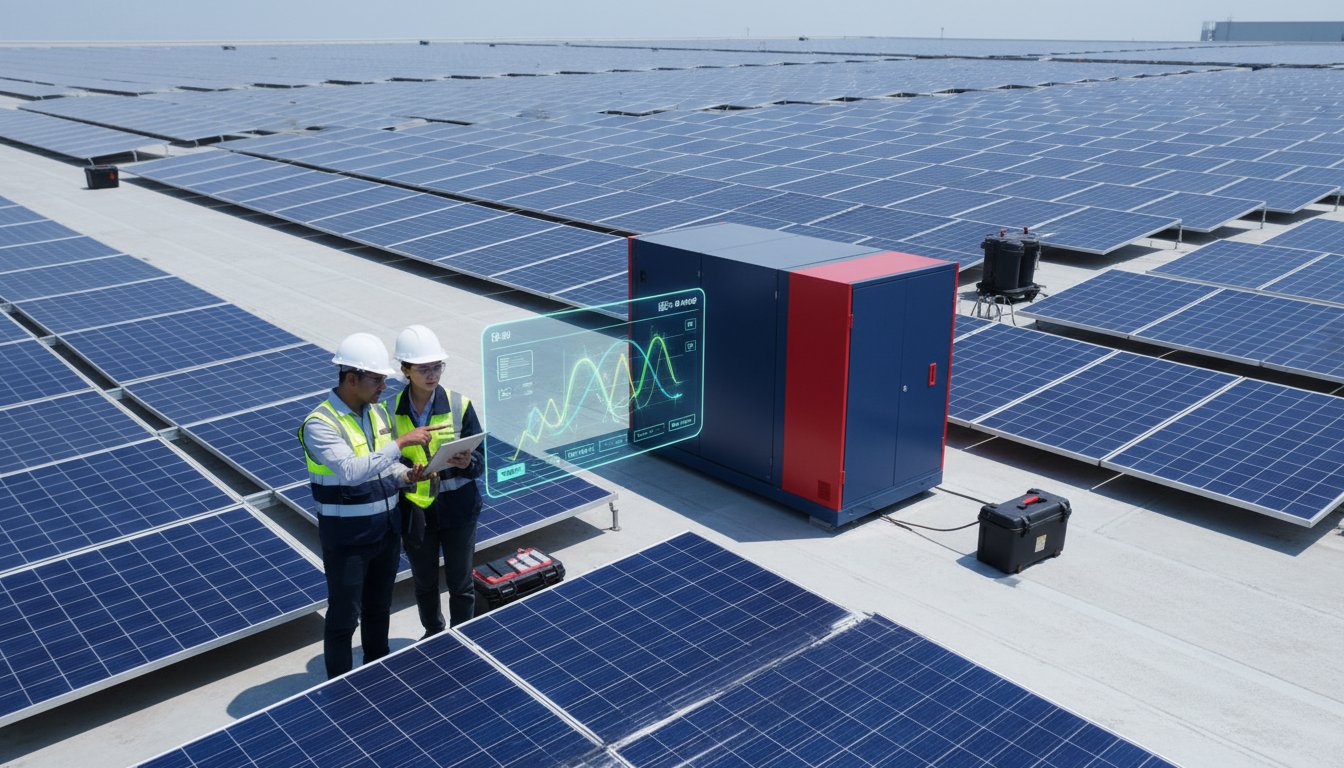
Discover why Heterojunction Technology (HJT) is the definitive standard for high-efficiency solar investments in high-temperature climates.
The 2026 Photovoltaic Standard: Defining HJT Solar Panels
In the evolving landscape of renewable energy, Heterojunction (HJT) solar panels represent the next generation of photovoltaic efficiency and reliability. HJT cells are defined by their unique structure, which utilizes a crystalline silicon core strategically sandwiched between ultra-thin layers of amorphous silicon. This advanced architecture is rapidly transitioning HJT from a niche technology into the mainstream high-performance standard for 2026 and beyond. Key physical attributes, including a symmetrical N-type wafer foundation and inherent bifaciality, establish 2026 as the 'Year of HJT' for demanding industrial, commercial, and utility-scale solar projects where maximum energy yield is non-negotiable.
The Hybrid Architecture Advantage
The core strength of HJT technology lies in its hybrid design, which combines the high energy absorption capabilities of amorphous silicon with the proven stability and performance of crystalline silicon. This "sandwich" structure is engineered to passivate the cell surface, a process that significantly minimizes the electron recombination that plagues conventional solar cells. By reducing these energy losses at the surface, HJT cells can convert more sunlight into usable electricity. Nippon HJT cells leverage band-gap engineering to create a powerful internal electric field by layering dissimilar semiconductor materials, which accelerates electron transport and minimizes energy loss. (Heterojunction solar cell technology)
N-Type Wafer Superiority
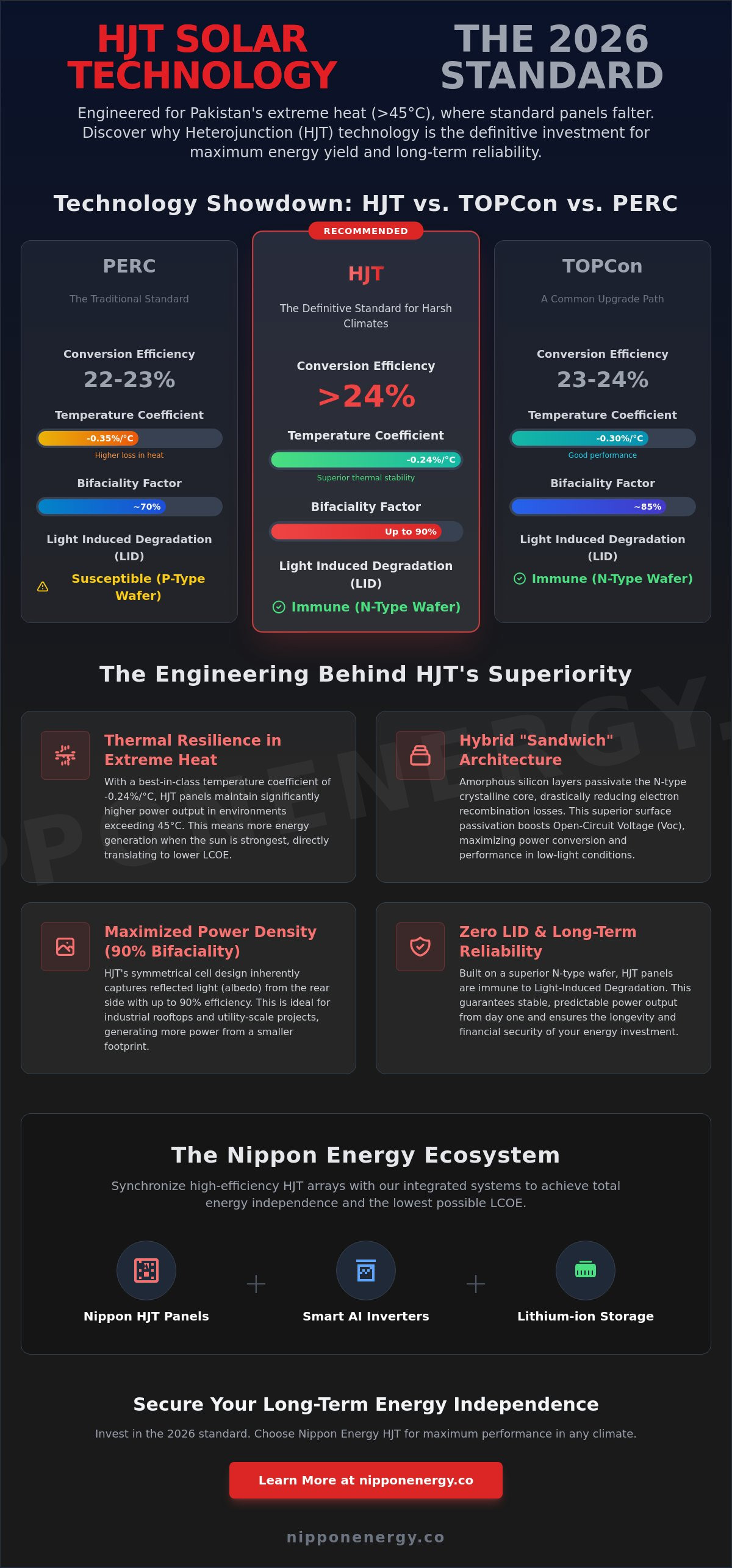
The foundation of every Nippon HJT panel is a high-purity N-type silicon wafer. Unlike P-type wafers used in older technologies like PERC, N-type wafers are immune to Light-Induced Degradation (LID), a phenomenon that permanently reduces panel performance over time. This inherent stability ensures a more predictable and sustained energy yield throughout the panel's 30-year lifespan. The exceptional purity of the N-type silicon is a critical factor in achieving cell efficiencies exceeding 24%, setting a new benchmark for mass-produced solar technology in 2026.
The Engineering of Efficiency: How HJT Cells Outperform Traditional PV
The superior performance of HJT solar panels is a direct result of sophisticated engineering at the cellular level. By combining dissimilar semiconductor materials, HJT technology creates a powerful internal electric field that optimizes the flow of electrons. This is further enhanced by the strategic application of intrinsic amorphous silicon layers, which provide exceptional surface passivation to reduce energy loss. To complete the design, Transparent Conductive Oxide (TCO) layers are applied to both sides, maximizing light capture while ensuring superior electrical conductivity. This symmetrical structure also enables industry-leading bifaciality, with gains consistently exceeding 90% in optimal conditions.
Minimizing Recombination Losses
A primary advantage of HJT architecture is the near-total elimination of the "dead layer" found at the surface of traditional cells, where energy-carrying electrons are often lost. This technical breakthrough in minimizing recombination losses has a direct impact on the panel's key electrical parameters. It results in a higher open-circuit voltage (Voc) and an improved fill factor (FF), two of the most critical indicators of a solar cell's efficiency. Furthermore, lower recombination rates enable HJT panels to perform exceptionally well in low-light conditions, such as during early mornings, late evenings, and overcast days. (HJT vs. TOPCon)
Bifaciality and Albedo Capture
The perfectly symmetrical design of an HJT cell allows it to absorb light with nearly equal efficiency from both its front and rear sides. This inherent bifaciality is a significant advantage for large-scale installations, where reflected light (albedo) from the ground surface can be captured and converted into additional energy. When installed over reflective surfaces like white membrane roofs, light-colored gravel, or desert sand, Nippon HJT panels can increase total energy yield by 10-30%. This capability dramatically improves the ROI for ground-mount solar farms and commercial flat-roof projects, maximizing power generation from a given footprint.
Strategic Comparison: HJT vs. TOPCon vs. PERC in 2026
For discerning solar investors in 2026, the choice between leading panel technologies—HJT, TOPCon, and PERC—is critical. While PERC remains a standard option, the high-performance market is a contest between HJT and TOPCon. HJT consistently leads in module efficiency benchmarks, offers a more streamlined manufacturing process, and provides superior long-term degradation rates. An analysis of the Levelized Cost of Energy (LCOE) reveals that while HJT panels have a higher initial capital cost, their superior energy yield, lower degradation, and enhanced durability result in a significantly lower lifetime cost per kilowatt-hour, making them the most financially sound long-term investment.
The Battle for the N-Type Crown: HJT vs. TOPCon
In the direct comparison between N-type technologies, HJT demonstrates clear advantages, particularly in harsh climates. HJT's superior temperature coefficient of approximately -0.26%/°C means it loses less power in high heat compared to TOPCon's typical -0.30%/°C. This difference translates into a substantial energy gain over a project's lifetime in regions like the Middle East and South Asia. Additionally, HJT's true symmetrical structure allows it to achieve 10-15% higher bifacial gains than TOPCon, which has inherent structural limitations. After 25 years of operation, Nippon HJT panels retain over 92% of their initial power output, a figure that significantly surpasses the typical 87-89% retention of standard TOPCon modules. (HJT solar cell development review)
Long-Term Reliability and Degradation
Nippon HJT panels are engineered for exceptional durability. Their structure provides robust resistance to Potential Induced Degradation (PID), a common issue in humid, high-voltage environments that can severely compromise lesser technologies. The cell's encapsulation and design also protect against moisture ingress, a key factor in long-term reliability. This focus on durability and resilience is why Nippon Energy backs its HJT modules with a 30-year performance warranty, offering project developers and asset owners a bankable guarantee of long-term energy production and financial returns.
Thermal Resilience: Optimizing Yield in High-Temperature Climates
A defining challenge for solar projects is the "heat problem," where high ambient temperatures cause a panel's voltage to drop, reducing its power output. HJT technology is engineered specifically to counter this effect. Its industry-leading temperature coefficient ensures that it loses significantly less power for every degree of temperature increase above standard test conditions. This thermal resilience is critical in high-temperature regions, as demonstrated in case studies across the Middle East (Dubai/Riyadh) and South Asia (Pakistan). The use of TCO and glass-glass encapsulation further enhances durability, protecting against humidity and corrosion in coastal or industrial areas.
Dominating the Desert Climate
In the demanding desert climates of Riyadh and Karachi, solar panels are subjected to extreme heat and abrasive conditions. During peak summer hours, when temperatures can cripple the output of standard panels, HJT's low-temperature coefficient prevents this thermal throttling, ensuring maximum energy harvest when it is needed most. The robust glass-glass construction of Nippon HJT modules also provides superior resistance to physical damage from sandstorms and abrasion, ensuring mechanical integrity and sustained performance in the world's most challenging environments.
Low-Light and Diffuse Radiation Performance
HJT's superior performance extends beyond just high-heat scenarios. The technology's excellent response to a wide spectrum of light allows it to begin generating power earlier in the morning and continue later into the evening, maximizing the "shoulder hours" of energy production. This extended generation window is invaluable for charging battery storage systems. Furthermore, HJT excels at capturing diffuse radiation, making it highly effective during the monsoon seasons in Lahore or on high-smog days in industrial centers like Berlin, consistently delivering more energy than conventional panels under suboptimal light conditions.
The Nippon Ecosystem: Implementing HJT for Industrial Scale
A high-performance solar panel is only one component of a successful energy project. Nippon Energy delivers a complete, integrated ecosystem designed to maximize the output and ROI of HJT technology. This includes a synergistic pairing with Nippon Smart AI Inverters, which are calibrated to optimize the unique high-voltage output of HJT cells. When coupled with Nippon Lithium-ion Battery Storage, the system provides true 24/7 energy independence. Through our professional EPC services, we manage every stage of project development, from initial feasibility studies to the turnkey construction and commissioning of utility-scale HJT solar farms, followed by predictive maintenance and remote asset monitoring.
Integrated Energy Management
The intelligence of the Nippon ecosystem resides in its integrated management capabilities. Our Smart AI Inverters use machine learning algorithms to precisely track and adapt to the unique power curves of HJT panels, maximizing energy conversion in real time. This system intelligence also optimizes battery charging cycles by leveraging HJT's extended daily generation window, ensuring that the maximum amount of low-cost solar energy is stored and available on demand. This holistic approach ensures every component works in unison for peak system performance. For more information, see our guide on Nippon Lithium-ion Battery Storage.
Professional EPC and Maintenance
Nippon Energy applies a methodical and disciplined approach to engineering, procurement, and construction (EPC) for solar infrastructure in key global hubs like Tokyo, Dubai, and Karachi. Our expertise ensures that HJT solar assets are designed, built, and commissioned to the highest international standards. Following deployment, our specialized maintenance programs are crucial for preserving the 30-year lifecycle and peak performance of HJT technology, protecting your investment for decades to come. To begin planning your next project, Consult with Nippon Energy for your utility-scale HJT project.


