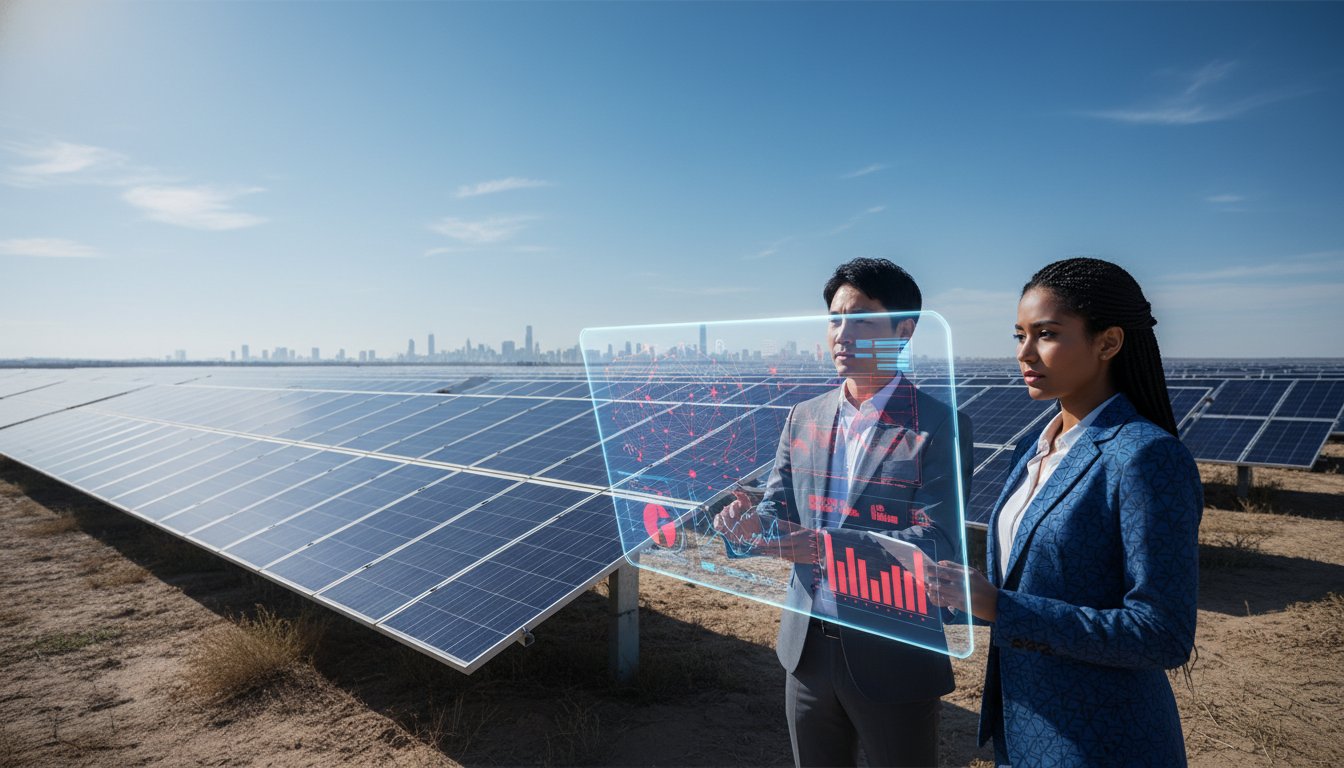
If your solar infrastructure isn't anticipating grid fluctuations before they occur, you're likely losing revenue to outdated, reactive management systems. You recognize that high O&M costs and energy yield unpredictability are no longer just operational hurdles; they're direct threats to your ROI in Pakistan’s complex energy market. This analysis explores the strategic benefits of ai in solar energy and how these intelligent systems are transforming solar efficiency, asset longevity, and grid stability in 2026.
The integration of machine learning is no longer a peripheral upgrade. It's the central nervous system of high-performance infrastructure. We'll detail how AI-driven predictive maintenance now reduces grid outages by up to 30% and how recent legislation, such as the Better Energy Storage and Safety Act of May 2026, mandates advanced data analytics for safer operations. You'll discover how Nippon Smart AI Inverters and HJT technology work in tandem to maximize energy yield, reduce downtime through predictive alerts, and secure energy independence via smart storage solutions. This is the roadmap for future-proofing your solar assets against a volatile global grid.
Key Takeaways
- Learn how autonomous system optimization shifts your infrastructure from reactive monitoring to real-time performance management for maximum structural integrity.
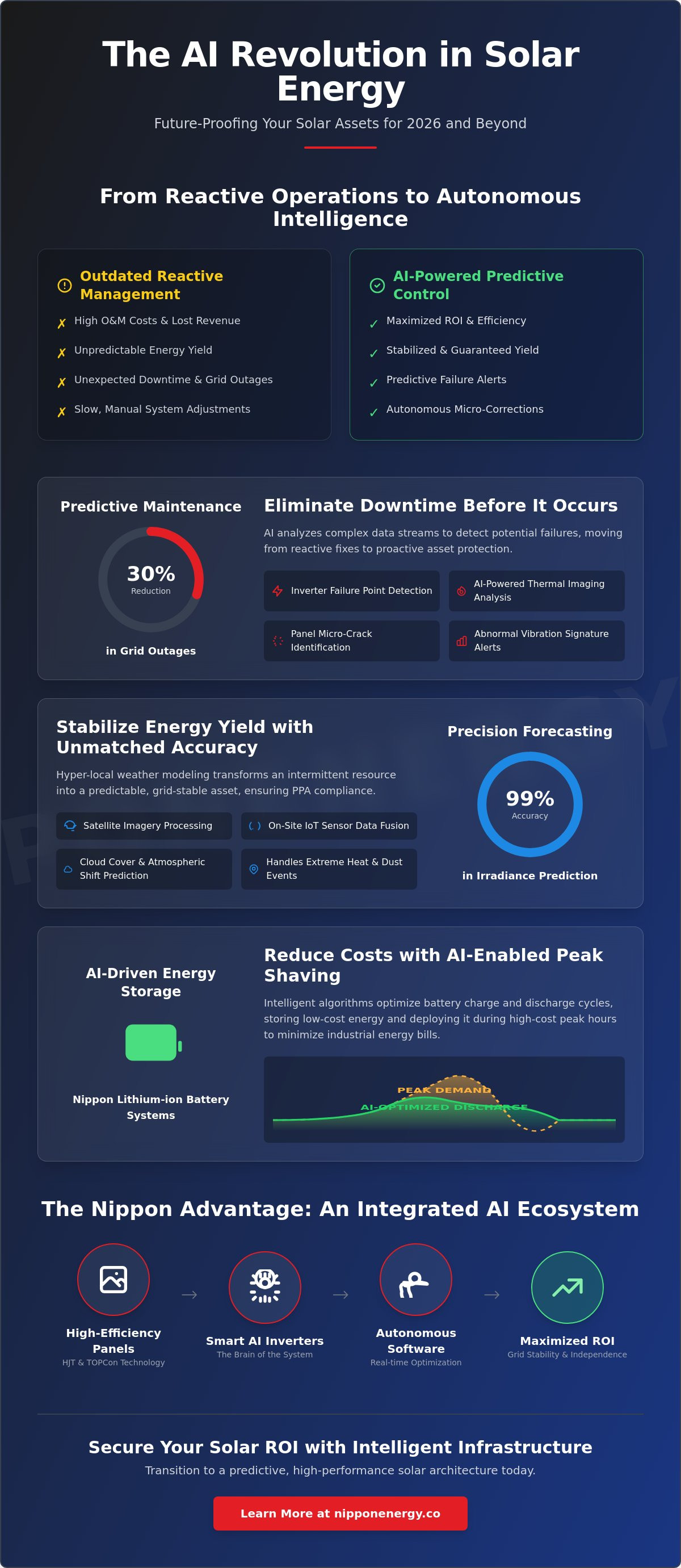
- Discover the benefits of ai in solar energy via hyper-local weather modeling that achieves 99% irradiance prediction accuracy to stabilize your energy yield.
- Identify how AI-powered thermal imaging and vibration signatures detect micro-cracks and inverter failure points before they lead to expensive operational downtime.
- Understand the mechanics of AI-enabled peak shaving to reduce industrial energy costs by optimizing the discharge cycles of Nippon Lithium-ion Battery Storage Systems.
- Explore the engineering synergy between Nippon Smart AI Inverters and HJT panels to achieve a high-performance, future-proofed solar architecture.
The Architecture of Intelligent Solar: Defining AI in 2026
In 2026, the definition of solar energy management has moved past simple data collection. AI in this sector refers to the deep integration of machine learning and edge computing directly into power electronics. This evolution has created the "Software-Defined Power Plant." In this model, intelligent code dictates the behavior of physical hardware to maximize ROI. One of the clearest benefits of ai in solar energy is how it bridges the gap between theoretical efficiency and actual energy yield. By processing environmental variables in real-time, the system compensates for local challenges like high ambient temperatures and particulate matter on panels, ensuring that the theoretical potential of the site is fully realized.
From Basic Monitoring to Autonomous Intelligence
2026 AI agents don't just log data; they execute complex commands autonomously. Neural networks integrated into inverter firmware allow for real-time load balancing and voltage regulation. This shift from reactive monitoring to autonomous optimization is essential for modern grid requirements. Manual adjustments are becoming obsolete in utility-scale projects because they're too slow to manage the volatility of modern weather patterns. The system makes thousands of micro-corrections per hour, ensuring the plant operates at its peak technical limit without human oversight. This level of automated precision is a cornerstone of the benefits of ai in solar energy for large-scale operators who require absolute reliability.
The Core Components of an AI-Enhanced Solar Ecosystem
An intelligent ecosystem requires a robust sensory architecture. IoT devices and smart meters serve as the system's sensory organs, providing module-level visibility across the entire installation. Edge computing units process this information on-site, which significantly reduces latency compared to traditional cloud-based models. This speed is vital for protecting the structural integrity of the electrical system during sudden surges or drops. These benefits become even more apparent when you pair intelligent software with high-performance TOPCon solar panels. The software manages the high-efficiency output of the TOPCon cells, ensuring that the superior electron flow is channeled into the grid or storage with minimal resistance. It's a calculated partnership between advanced material science and predictive digital architecture.
Precision Forecasting and Energy Yield Optimization
Precision forecasting is the technical foundation for grid stability in 2026. In Pakistan, where ambient temperatures frequently exceed 40°C and particulate matter affects atmospheric clarity, traditional forecasting models often fail. AI-driven systems utilize hyper-local weather modeling to achieve up to 99% accuracy in solar irradiance prediction. By processing satellite imagery and local sensor data, these algorithms anticipate cloud cover and atmospheric shifts minutes before they occur. This allows operators to manage intermittency with surgical precision, ensuring that the energy supply remains consistent even during volatile weather patterns. One of the primary benefits of ai in solar energy is this ability to turn an intermittent resource into a predictable, baseload-capable asset.
Advanced AI-driven cloud tracking also optimizes the performance of bifacial modules. The system analyzes the ratio of direct to diffuse light, automatically adjusting the panel tilt to capture the maximum ground-reflected albedo. This level of control is vital for maintaining Power Purchase Agreement (PPA) compliance. When operators can guarantee specific energy thresholds, they avoid the heavy financial penalties associated with under-generation. Research supported by the U.S. Department of Energy regarding AI for predictive maintenance in solar farms confirms that these data-driven approaches are essential for the long-term viability of high-capacity assets.
Hyper-Local Weather Modeling for Extreme Climates
In Pakistan's arid regions, dust storms and heatwaves represent significant operational risks. AI models predict these extreme events by correlating regional meteorological trends with site-specific IoT data. This foresight enables the real-time adjustment of cooling systems and allows for the preemptive cleaning of panels. By anticipating thermal stressors, the system protects Nippon HJT panels from the efficiency drops typically caused by excessive heat. These predictive algorithms ensure that the semiconductor layers remain within optimal temperature ranges, preserving the system's structural integrity and energy output.
Maximizing ROI Through Dynamic Load Management
Dynamic load management is another critical area where the benefits of ai in solar energy become clear. AI algorithms prioritize essential industrial loads during periods of low irradiance, ensuring that critical machinery stays operational without drawing expensive power from the grid. Additionally, these systems eliminate "clipping" losses in high-capacity installations by intelligently diverting excess peak-hour energy into storage. This results in a quantifiable improvement in financial performance, as every generated watt is utilized or stored rather than wasted. To understand how these intelligent systems can be integrated into your specific site, you can review the Nippon Energy project development services for large-scale applications.
Predictive Maintenance: Eliminating Downtime Before It Occurs
Traditional solar maintenance relies on rigid, calendar-based schedules that often miss emerging faults or mandate unnecessary site visits. In 2026, AI-driven predictive maintenance replaces this reactive model with a performance-based intervention strategy. This is one of the most tangible benefits of ai in solar energy for industrial operators in Pakistan, where harsh environmental conditions accelerate wear on sensitive components. By utilizing AI-powered thermal imaging drones, systems can identify micro-cracks and hot spots at the module level before they escalate into catastrophic failures. This proactive approach is proven to reduce grid outages by up to 30% compared to traditional methods, ensuring that your infrastructure remains operational when energy demand is at its peak.
Beyond panel health, AI monitors the structural integrity of power electronics by analyzing vibration and heat signatures. Nippon Smart AI Inverters use these data points to predict failure points in capacitors or cooling fans weeks before a breakdown occurs. This level of foresight allows for scheduled repairs during low-irradiance periods, which effectively eliminates unplanned downtime. When every minute of generation counts toward your ROI, the ability to preempt hardware fatigue becomes a critical financial advantage.
Autonomous Fault Detection and Diagnostics
AI-powered diagnostics provide string-level visibility that manual inspections cannot replicate. If a specific string of modules underperforms, the system immediately cross-references historical data and real-time environmental conditions to diagnose the root cause. It then triggers an automated ticketing system through Solar System Maintenance and Monitoring protocols, alerting EPC partners to the specific hardware issue. In large industrial solar farms, this prevents the cascading failure effect where a single faulty component compromises the output of an entire array. It's a methodical way to maintain peak performance without the overhead of constant manual oversight.
The Longevity Benefit: Future-Proofing Solar Assets
Asset longevity is a core pillar of the Nippon Energy engineering philosophy. Intelligent state-of-health monitoring for Nippon Lithium-ion Battery Storage Systems prevents the deep-discharge cycles and thermal imbalances that cause premature degradation. Similarly, AI manages the electrical load on Nippon TOPCon Solar Panels to mitigate potential-induced degradation (PID). These safeguards don't just protect the hardware; they enhance the system's long-term resale value and can lead to lower insurance premiums for large-scale installations. By maintaining optimal operating conditions, AI ensures that your infrastructure remains a high-yielding asset for its entire 25 to 30-year projected lifecycle. You aren't just buying hardware; you're investing in an autonomous system designed for permanent excellence.
AI-Driven Energy Storage and Grid Stability
The transition from passive energy generation to active grid support is managed by sophisticated storage orchestration. The integration of Nippon Lithium-ion Battery Storage Systems into industrial frameworks provides a critical buffer against the inherent volatility of renewable sources. One of the primary benefits of ai in solar energy management is the ability to govern bi-directional energy flows with millisecond precision. This ensures that power is diverted to the grid when demand peaks and stored when production exceeds local requirements. By acting as the brain of the storage unit, AI transforms a static battery into a dynamic asset that supports grid frequency and prevents the voltage fluctuations common in localized Pakistan microgrids.
AI-enabled peak shaving represents a significant financial advantage for industrial operators. The system analyzes historical consumption patterns and real-time utility rates to identify peak demand windows. It then automatically discharges stored energy during these expensive periods, which reduces the reliance on high-tariff grid power. This strategic discharge doesn't just lower operational costs; it also reduces the thermal stress on the utility infrastructure. By smoothing out demand spikes, AI helps maintain the structural integrity of the wider electrical network while securing a faster path to energy independence.
Intelligent Battery Management Systems (BMS)
Modern battery management has evolved into a predictive discipline. AI algorithms within the BMS monitor individual cell health to prevent thermal runaway and maintain optimal cell balancing. This granular control is essential for maximizing the cycle life of Nippon Lithium-ion Battery Storage Systems. The system uses predictive storage logic to pre-charge batteries based on forecasted energy prices or anticipated weather events. By moderating the depth of discharge (DoD) through AI-driven setpoints, the software prevents the chemical degradation associated with deep-cycling. This technical precision is among the core benefits of ai in solar energy for long-term asset protection, ensuring the hardware exceeds its projected functional lifespan.
Grid Synchronization and Ancillary Services
Maintaining stability during the transition between on-grid and off-grid modes requires instantaneous decision-making. AI manages this synchronization by aligning the inverter's phase and frequency with the utility grid before connection. This capability allows solar assets to provide ancillary services, such as reactive power compensation, which stabilizes the grid for all nearby users. In 2026, autonomous AI agents are beginning to facilitate peer-to-peer energy trading. These agents sell excess power back to the grid at the most profitable intervals, turning a compliance-heavy asset into a self-optimizing revenue stream. To secure your facility’s stability, explore our Nippon Lithium-ion Battery Storage Systems for large-scale industrial integration.
The Nippon Advantage: Integrating Smart AI Inverters
The engineering philosophy at Nippon Energy centers on the "Nippon Advantage," which integrates Japan's innovative leadership in robotics and machine learning into solar hardware. Nippon Smart AI Inverters are designed to act as the primary processor for the entire energy ecosystem. Unlike generic software overlays, our system provides a direct link between digital logic and physical performance. This synergy allows for the seamless management of high-efficiency N-type cells. By pairing these inverters with TOPCon solar panels or HJT modules, operators can extract maximum yield even in Pakistan's high-temperature environments. One of the structural benefits of ai in solar energy is this unified architecture, which eliminates the data bottlenecks typically found in multi-vendor installations.
Our Solar Project Development and EPC services leverage AI long before the first panel is installed. We use proprietary algorithms for site feasibility studies and 3D shadow analysis to predict shading patterns with absolute precision. This ensures that the system layout is optimized for the specific topography of the site. By utilizing AI in the design phase, we reduce the gap between simulated projections and actual field performance. This methodical approach ensures that every project meets the rigorous standards of defense-critical infrastructure, a designation increasingly relevant as AI-driven data centers account for a larger share of energy demand.
Hardware-Software Synergy in Nippon Systems
A single-vendor ecosystem provides the structural stability required for large-scale success. Nippon systems utilize proprietary AI algorithms specifically tuned for Nippon Lithium-ion Battery Storage. This deep integration allows for over-the-air (OTA) updates that continuously refine the system’s efficiency without requiring on-site technical intervention. Remote monitoring tools provide real-time diagnostics, ensuring that the inverter firmware remains optimized against the latest grid stability requirements. This hardware-software fusion is a core component of the benefits of ai in solar energy, as it allows the system to evolve alongside changing regulatory frameworks like the Better Energy Storage and Safety Act of May 2026.
Strategic Implementation: Partnering with Nippon Energy
Long-term reliability is secured through Solar System Maintenance and Monitoring contracts that are powered by our predictive analytics engine. Our EPC team doesn't just build; we future-proof. We use AI to monitor the state-of-health across all components, from the individual cells in our lithium-ion systems to the structural integrity of the mounting hardware. This disciplined focus on excellence ensures that your investment remains a high-performance asset for decades. To begin your transition to an intelligent energy framework, consult with Nippon Energy on AI-integrated solar solutions today.
Securing the Future of the Software-Defined Power Plant
The transition to an autonomous energy landscape is no longer a theoretical projection; it's a technical necessity for industrial resilience in 2026. By integrating machine learning with high-performance hardware, operators can achieve 99% irradiance forecasting accuracy and reduce unplanned outages by up to 30%. These benefits of ai in solar energy extend beyond simple yield optimization to include the long-term preservation of your physical assets. Whether you're managing N-type TOPCon arrays or complex lithium-ion storage systems, the shift toward a software-defined architecture ensures that your infrastructure remains stable, efficient, and profitable for its entire lifecycle.
Nippon Energy remains committed to this standard of excellence through our proprietary AI-driven HJT technology and advanced storage management protocols. With global EPC expertise spanning five continents, we provide the technical framework required for monumental success in Pakistan’s evolving energy market. It's time to move past reactive monitoring and embrace the precision of autonomous energy orchestration. Design your future-proof energy infrastructure with Nippon Smart AI Inverters and secure a permanent advantage in the global energy transition.
Frequently Asked Questions
How does AI actually increase the efficiency of solar panels?
AI increases efficiency by optimizing Maximum Power Point Tracking (MPPT) algorithms in real-time. It adjusts hardware responses to rapid changes in atmospheric conditions, ensuring that electron flow remains at its peak technical limit. This level of precision is one of the key benefits of ai in solar energy, as it extracts more power from the same square footage of panels than traditional, static systems.
Can AI help reduce the maintenance costs of a large-scale solar farm?
AI reduces maintenance costs by replacing scheduled inspections with targeted, performance-based interventions. The system identifies specific component failures before they occur, which prevents the need for emergency repairs. This methodical approach reduces the frequency of site visits and lowers the total cost of ownership for large-scale industrial arrays by detecting anomalies in vibration or thermal signatures early.
Is AI integration compatible with existing solar energy systems?
AI integration is often compatible with existing systems through the installation of Nippon Smart AI Inverters or dedicated edge computing devices. These components bridge the gap between legacy hardware and modern software architectures. It's essential to consult with an EPC specialist to ensure that the communication protocols of your existing panels are compatible with the data requirements of the new management software.
What is the role of AI in solar energy storage management?
In storage management, AI acts as the primary controller for the Battery Management System (BMS). It dictates when to store energy and when to discharge it based on forecasted demand and grid pricing. This intelligent orchestration prevents the deep-discharge cycles that degrade lithium-ion batteries, effectively extending the functional lifespan of the storage asset while maximizing the utility of every generated watt.
How does AI forecasting differ from traditional weather reports?
Traditional weather reports provide regional summaries, whereas AI forecasting offers hyper-local irradiance predictions for specific GPS coordinates. The algorithms process satellite imagery and local sensor data to anticipate cloud movement with 99% accuracy. This granularity allows for precise grid synchronization and more reliable energy yield projections, which is vital for maintaining PPA compliance in volatile climates.
What are the security risks associated with AI in solar energy infrastructure?
Security risks primarily involve data integrity and the vulnerability of IoT sensors to unauthorized access. Nippon Energy mitigates these risks by following the AI Risk Management Framework, which was introduced by NIST to enhance the trustworthiness of energy infrastructure. Encrypted hardware and secure over-the-air updates ensure that the system remains resilient against cyber threats and maintains its structural integrity.
Can AI-driven solar systems operate entirely off-grid?
AI-driven systems are ideally suited for off-grid operations because they autonomously prioritize critical industrial loads during periods of low production. The software manages the balance between generation, storage, and consumption to maintain microgrid stability. This level of control prevents system collapses and ensures a reliable power supply without utility grid support, making it a robust solution for remote Pakistan locations.
How much ROI can I expect from investing in AI-enhanced solar hardware?
Investing in AI-enhanced hardware delivers ROI through increased energy yield and significantly reduced O&M expenses. While specific financial outcomes depend on site conditions, the benefits of ai in solar energy are realized through the prevention of unplanned downtime and the extension of hardware lifecycle. These factors combined create a more resilient and profitable energy asset over its 25-year projected lifespan.


