

Could a solar system underperform before its first unit of electricity is generated? Yes. A design based on the wrong energy profile, unsuitable equipment, or overlooked site conditions can create problems that persist long after installation. In Pakistan, the shift to net billing for new applicants in February 2026 makes it more important to match system design to on-site energy use. The common solar installation mistakes to avoid are preventable when each project stage has a clear decision and verification checkpoint.
To assess a proposal, compare it with your actual consumption, roof and operating needs. Then check that the installation matches the approved design and that the handover includes clear operating and test records. This guide outlines practical checks for each stage, so you can spot gaps before they undermine performance or reliability.
We’ll follow the project from assessment and system sizing through equipment selection, installation, commissioning and ongoing monitoring. Each stage affects the next, which is why coordinated solar project development and EPC help connect design decisions with installation and handover. The result is a clearer framework for evaluating a solar project and tracking its performance over time.
Key Takeaways
- Use a documented planning sequence to connect energy needs, site conditions, roof assessment and design assumptions before approving a system.
- Compare each project requirement with the design, selected equipment and evidence that the installed components match.
- Separate visual installation checks from electrical testing, which should follow qualified personnel and project-specific procedures.
- The common solar installation mistakes to avoid span load planning, site assessment, equipment selection, installation and handover.
- A coordinated EPC process can link assessment, design, procurement, installation and handover, while monitoring supports ongoing performance oversight.
Common Solar Installation Mistakes in Pakistan: Where Projects Go Off Track
Installation quality is shaped well before panels, inverters or batteries reach the site. Decisions about energy needs, site conditions, system design, equipment, installation and handover form a chain. An unsupported assumption early in the process can cause avoidable rework or leave the finished system poorly matched to its purpose.
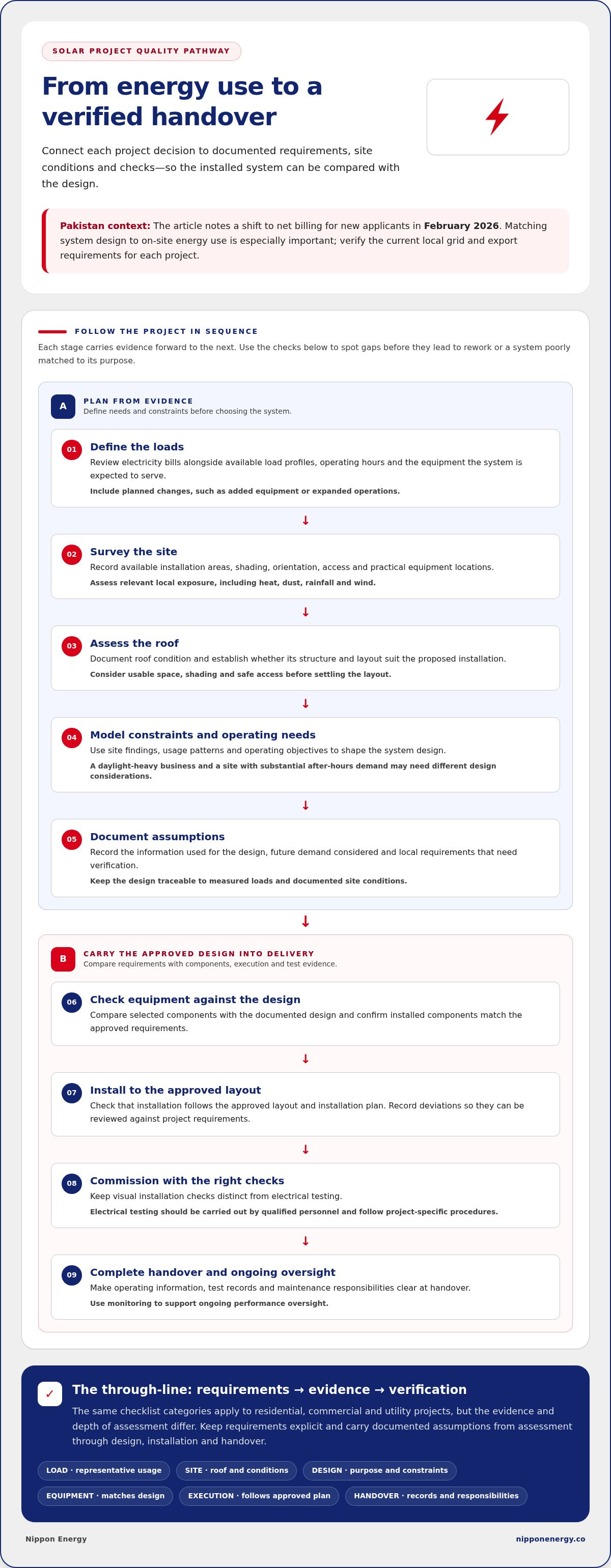
A solar installation mistake is a preventable gap between a project's requirements and the way its system is designed, installed, tested or handed over. The main error categories are:
- Load: Designing around incomplete or unrepresentative energy-use information.
- Site: Overlooking roof condition, usable area, shading, access or exposure to local conditions.
- Design: Failing to account for site constraints and the intended operating arrangement.
- Equipment: Selecting components that don't align with the documented design.
- Execution: Deviating from the approved layout or installation plan.
- Handover: Leaving operating information, test records or maintenance responsibilities unclear.
The assessment scope must fit the project. A residence calls for a clear picture of household loads and daily usage. A commercial site may have different operating schedules and demand patterns. A utility project needs assessment at a different scale, with its own site, design and coordination requirements. The same checklist categories apply, but the evidence and depth of analysis differ.
How early planning errors affect a solar project's outcome
An energy profile based on limited or outdated information can distort system design. If actual usage differs from the assumptions, expected generation may not align with when the site needs power. Site constraints matter just as much: roof condition, usable space, shading and equipment locations should shape the layout before components are selected. These are manageable project risks, not proof that every installation will fail.
Why Pakistan projects need locally relevant checks
Conditions vary by location and site. Assess heat, dust, rainfall and wind exposure during the project survey, then reflect relevant findings in the design and installation plan. Don't assume a generic layout suits every roof or operating environment. Grid connection and electricity export arrangements also depend on current local requirements, so verify the applicable Pakistan-specific regulations for each project.
These checks establish the basis for the next project decisions. Residential, commercial and utility installations should each document the conditions they were designed around, so the design can be compared with the site and intended operation. To avoid common solar installation mistakes, make requirements explicit, record assumptions and carry them forward into equipment selection and execution.
Planning and Solar System Design Mistakes to Prevent in Pakistan
Good system design starts with evidence, not a standard capacity or a quick estimate based on a single electricity bill. Use a documented sequence so each decision has a clear basis and the design can be reviewed before equipment is selected.
- Define the loads. Review electricity bills alongside available load profiles, operating hours and the equipment the system is expected to serve.
- Survey the site. Record available installation areas, shading, orientation, access and practical equipment locations.
- Assess the roof. Document its condition and establish whether its structure and layout suit the proposed installation.
- Model constraints. Consider how site findings, usage patterns and operating objectives affect the system design.
- Document assumptions. Record what information informed the design, what future demand was considered and which local requirements need verification.
A system design should be traceable to measured loads and documented site conditions. This makes it easier to see whether the proposal fits the project, instead of relying on a universal system size that may not suit the site.
Mistake: sizing the system before checking actual energy use
Use bills to understand consumption over time, then compare them with load profiles and operating hours where available. A business operating mainly during daylight may have a different generation and usage pattern from one with substantial demand after working hours. Include planned changes, such as added equipment or expanded operations, as design inputs rather than assuming today's demand will remain fixed.
Mistake: overlooking site, roof, and Pakistan grid requirements
Shading, orientation, roof condition, structural capacity and safe access can all shape the layout. Record them before deciding where equipment will go. Grid connection and electricity export are separate project considerations, and applicable local utility requirements should be verified for each project because they can change. For a broader view of how assessment and delivery fit together, explore this solar EPC services guide.
Keep three objectives distinct in the design brief: using generated electricity on site, supplying backup power and exporting surplus electricity. They are related, but each affects system planning differently. Battery storage should serve a defined operating need, while export arrangements should be based on current project-specific requirements, not an assumption about how surplus power will be treated.
For general solar research and technology context, the U.S. Department of Energy Solar Guidelines provide a useful reference, but they don't replace Pakistan-specific assessments or local requirements. Nippon Energy’s solar project development and EPC connects assessment, design, procurement and execution, helping keep documented project assumptions in view as planning advances.
Equipment and Installation Mistakes: Compare the Design with Site Conditions
Equipment selection is not a catalogue exercise. Panels, inverters, batteries, mounting structures and electrical components must correspond to the approved design and the conditions documented for the site. A component can have strong specifications on its own and still be unsuitable if its role or interfaces don't match the system plan.
Use a comparison table during procurement and installation to make the decision trail visible. Fill it with project-specific information from the approved design, manufacturer datasheets and site records.
| Project requirement | Design specification | Selected equipment | Verification evidence |
|---|---|---|---|
| Generation at the surveyed site | Documented module arrangement and design basis | Selected panels and their stated specifications | Datasheets and installed component records |
| System conversion and operation | Inverter role and documented operating parameters | Selected inverter model and stated specifications | Design documents, datasheet, and configuration record |
| Defined storage objective | Battery role and system interface requirements | Selected battery and specified system components | Approved design and manufacturer documentation |
| Site-specific mounting and electrical layout | Structure, cable routes, connection points, and equipment locations | Installed structures and electrical components | Site plan and installation inspection records |
Mistake: selecting equipment without checking system compatibility
Compare module, inverter and storage specifications against the approved system design as a complete set. Use manufacturer datasheets and project documentation to verify stated specifications and intended roles. Don't rely on generic assumptions about a technology or product category. For example, Nippon Energy's TOPCon Modules are rated up to 720 W with max efficiency 23.8%, while its HJT Modules (Nippon G12) are rated up to 755.50 W with max efficiency 24.18%. These are module specifications, not a guarantee of a system's output. The appropriate choice still depends on the design basis and site conditions. Nippon Energy’s TOPCon solar panels guide provides further context for evaluating this module category.
Mistake: treating mounting and electrical work as minor details
Structure design should reflect the surveyed roof and site conditions. Installation plans should show cable routes, connection points and equipment locations before work begins. During execution, qualified teams should check that installed components match the plan, cables follow specified routes, labels are present as required by project documentation, and protection components correspond to the design. Review inverter placement against the documented location and relevant manufacturer instructions as well.
Keep inspection evidence with the project records. Visual checks can identify apparent differences between the installation and drawings, but electrical tests require qualified personnel and project-specific procedures. Verify any cited technical standard or Pakistan-specific requirement for the project rather than assuming it applies. This comparison makes common solar installation mistakes easier to identify before they become harder to correct. Nippon Energy’s solar project development and EPC connects assessment, procurement, design and execution within a coordinated project process.
Installation, Commissioning, and Handover Checks for Pakistan Solar Projects
Installation is not complete when the equipment is mounted. A project needs a controlled transition from site work to operation, supported by inspection records, test results and clear operating information. Use this sequence to review that transition:
- Inspect the completed work visually. Compare the installation with approved drawings and project documents. Note visible differences in component locations, cable routing, labels and equipment placement.
- Verify installed components. Match panel, inverter, battery and other equipment records against the approved design. Record model identifiers and any documented changes.
- Test operation. Have qualified personnel perform electrical tests using project-specific procedures. Keep these tests distinct from visual inspections and record the results against applicable project criteria.
- Document the outcome. Retain inspection notes, test results, commissioning records and any outstanding actions with the project file.
- Explain the handover. Review operating instructions, system information, maintenance responsibilities and appropriate service contacts with the owner or operator.
Commissioning is the documented verification that an installed system operates as designed. It should record what was checked and tested, not make an unsupported promise about future performance. Project-specific procedures and applicable Pakistan requirements should guide the process.
Mistake: accepting installation without a documented handover
At handover, owners should receive the approved design, equipment records, inspection and test results, operating instructions and service contacts. Include relevant system configuration information and a record of any design changes made during execution. These documents give future maintenance teams a reliable reference for comparing the installed system with its intended configuration when investigating an issue.
Keep the records together and accessible. Missing documentation can make it harder to identify installed components, understand the original design assumptions or interpret later service findings. Record actual test results and applicable terms as provided; don't assume a specific test outcome or warranty condition.
Mistake: skipping performance monitoring after commissioning
Establish an initial operating baseline from available system monitoring information and commissioning records. Later reviews can compare operation with that reference and identify changes that may warrant investigation. Monitoring doesn't explain the cause of a change by itself, so pair unusual observations with a structured review of system records and site conditions. Nippon Energy’s solar system maintenance guide explores how ongoing oversight fits into system care.
A coordinated handover should connect installation records with future performance review. Nippon Energy provides solar EPC services that link project development, installation and handover. Explore solar project development and EPC for a coordinated approach to project delivery.
Prevent Common Solar Installation Mistakes with a Coordinated EPC Approach
A reliable project process keeps requirements, design decisions, procurement, site execution and handover connected. Before approving work to move into execution, use this checklist to confirm that key decisions are recorded and traceable:
- Requirements: Document the project’s operating objectives, energy-use assumptions, backup needs and anticipated demand changes.
- Site assessment: Record relevant site findings, including roof condition, usable area, shading, access and environmental exposure.
- Design: Ensure the proposed layout and system configuration reflect those requirements and recorded site conditions.
- Equipment: List selected panels, inverters, batteries, structures and electrical components, with the project basis for each selection.
- Installation: Establish how installed work will be compared with approved plans and how inspection findings or changes will be recorded.
- Handover: Define the records, test results, operating instructions and service information that will be provided at completion.
This sequence helps expose gaps before they carry forward. If a demand assumption, site detail, equipment choice or applicable requirement remains unresolved, record it as an open project decision with a responsible next step. Don't treat an assumption as a confirmed design input or guaranteed outcome. The checklist gives teams a common reference as decisions move from planning into delivery.
What to document before a solar project moves into execution
Keep a clear project record of objectives, demand assumptions, site findings, design decisions and applicable requirements. Include selected equipment and the documented rationale for matching it to the project. Record unresolved assumptions separately, such as information still needed to finalize a design decision. This gives procurement and installation a controlled basis and helps the project team recognize when a change needs review instead of allowing it to pass unnoticed into execution.
How EPC and ongoing monitoring support project continuity
Project development and EPC connect assessment, system design, procurement, installation and handover. Coordination across these stages makes the relationship between documented requirements and the delivered system easier to follow. Nippon Energy provides solar project development and EPC, along with solar system maintenance and monitoring for ongoing oversight after installation.
Monitoring supports performance review by providing operational information over time, while maintenance provides continued system oversight. Neither replaces sound initial assessment, design, equipment selection or commissioning. Post-installation oversight builds on the project records and operating baseline established at handover, helping teams recognize changes that may call for investigation.
Use this project-stage checklist to review the decisions that shape a solar installation and the records that carry them through delivery. Explore Nippon Energy’s solar project and EPC solutions to take the next step toward a coordinated project approach.
Make Your Next Solar Decision With Confidence
A solar project is easier to evaluate when its assumptions are visible. Before approving the next step, use the design record to understand why the proposed system fits the intended operation and what information would trigger a review. This makes it easier to distinguish a considered design change from an unplanned deviation.
The common solar installation mistakes to avoid often begin with decisions that were never clearly recorded or carried forward. A disciplined project process gives owners and teams a shared reference point, from early planning through future operation. That clarity matters as energy needs evolve, site conditions change or system performance raises questions. Keep decisions grounded in evidence rather than expectation.
For a project shaped around its requirements and site conditions, explore Nippon Energy’s solar project and EPC solutions. Take the next step toward a coordinated solar project with Nippon Energy.
Frequently Asked Questions
Is a site assessment necessary before installing solar panels?
Yes. A site assessment provides the information needed to shape a project design around the property rather than assumptions. It can identify practical factors such as equipment locations and roof features that may affect the layout. The assessment should match the project’s scale and use. For a Pakistan project, verify current utility connection, export and permitting requirements relevant to its location before proceeding.
Can solar panels be installed on an older roof?
Possibly, but age alone doesn't establish whether a roof is suitable. Its present condition, structure, waterproofing, layout and proposed mounting approach all matter. For example, a history of leaks or previous roof repairs may affect the solar layout. Record any required roof work in the project plan and consider how future roof maintenance can be carried out once the system is installed.
What happens if a solar system is sized incorrectly?
An incorrectly sized system may not align with the site’s actual use or operating goals. A household with heavy evening demand, for example, has a different usage pattern from a business that uses most of its electricity during daylight. That mismatch can lead to unmet expectations or capacity the project doesn't need. Reviewing consumption records and planned changes before approval helps address one of the common solar installation mistakes to avoid.
Does every solar installation need battery storage?
No. Battery storage isn't required for every project; the decision depends on operating goals, demand patterns and backup requirements. A project designed mainly to use solar generation during the day may have different priorities from one that needs power at other times. State the intended use in the design brief before selecting a system configuration, so the role of storage is considered rather than assumed.
Can a grid-tied solar system operate during a power outage?
Not necessarily. The presence of solar panels alone doesn't establish that a system can supply power during an outage. Operation depends on the system architecture, inverter capabilities, storage configuration and applicable requirements. If outage supply is an objective, make it explicit in the project design and handover documents. Review the documented operating mode with qualified personnel rather than assuming the system will provide backup automatically.
How can I tell whether a solar installation is performing as designed?
Compare operating information with the design assumptions and commissioning baseline over comparable reporting periods. Consider whether changes in site use, weather or shading could explain a difference before treating it as a fault. A single unusual reading isn't enough to establish a problem. Record persistent changes and have qualified maintenance support assess unexplained patterns against the system documentation.


