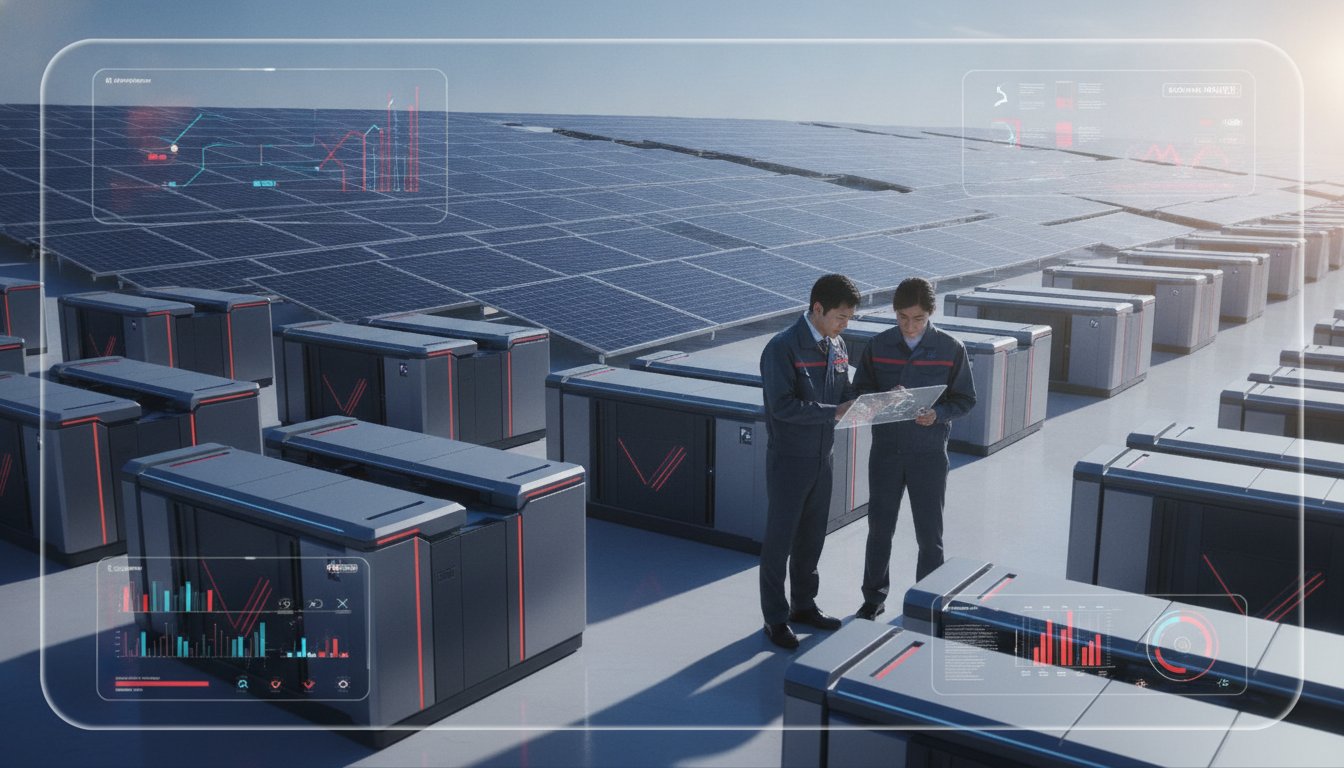
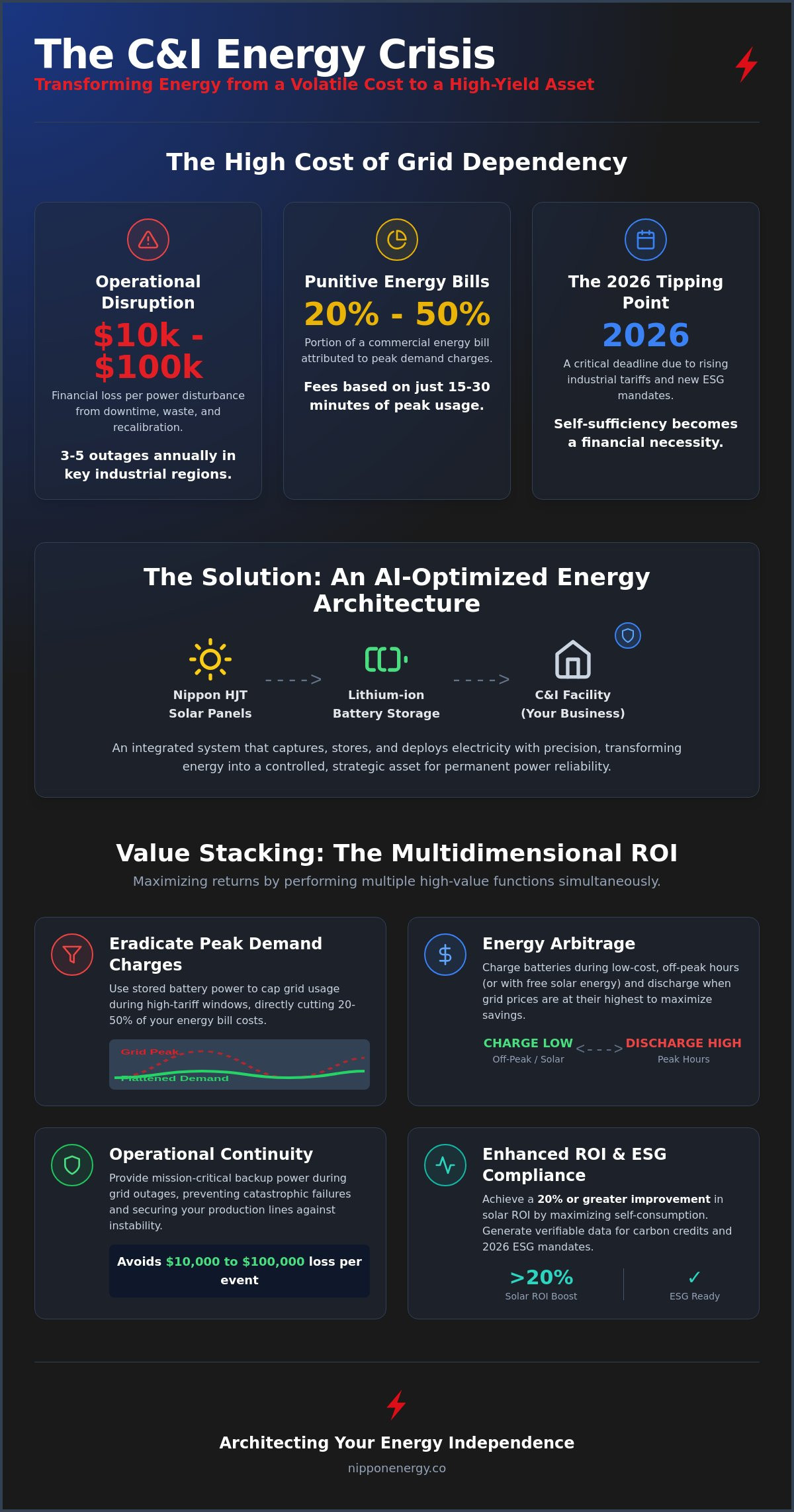
The average commercial facility loses between $10,000 and $100,000 per power disturbance, yet many operations in regions like Karachi and Lahore still rely on a grid that averages three to five outages annually. You've likely seen your operational costs climb due to punitive peak demand charges and the looming pressure of 2026 ESG mandates. Understanding the strategic benefits of solar plus storage for c&i is no longer about simple sustainability; it's about engineering a resilient, self-sustaining power architecture. Nippon Energy views energy not as a recurring expense, but as a sophisticated financial instrument that leverages Japanese engineering to secure your bottom line.
This guide explores how integrated HJT solar technology and lithium-ion storage systems transform your facility into a high-yield asset. We'll show you how to eliminate peak demand spikes and achieve a 20% or greater improvement in your solar ROI. By analyzing the 2026 Section 48E tax credit landscape and the mandatory UL 9540A safety standards, we provide a technical roadmap for energy independence. You'll discover the precise steps to move from grid vulnerability to a state of permanent, AI-optimized power reliability.
Key Takeaways
- Identify why 2026 represents the critical tipping point for C&I energy independence as rising industrial tariffs and carbon mandates reshape the global manufacturing landscape.
- Explore the strategic benefits of solar plus storage for c&i, focusing on how integrated systems eliminate peak demand charges and provide mission-critical backup for sensitive industrial operations.
- Understand the technical advantages of Nippon HJT panels in high-temperature regions and how specific AC or DC coupling architectures impact your long-term system performance.
- Analyze the financial transition from energy as a cost center to a high-yield asset by comparing direct ownership against PPA models in the context of 2026 lithium-ion price trends.
The Shift to Solar Plus Storage: Solving the C&I Energy Crisis
Solar plus storage is a sophisticated energy architecture that pairs photovoltaic generation with a battery energy storage system to synchronize power supply with real-time operational demand. It represents the transition from passive generation to active energy orchestration. Understanding the benefits of solar plus storage for c&i requires a shift in perspective; energy is no longer a fluctuating operational expense but a controlled strategic asset. This integrated approach allows a facility to capture, store, and deploy electricity with surgical precision, ensuring that no kilowatt-hour is wasted.
2026 marks a decisive tipping point for industrial energy management. Global grid instability and rising industrial tariffs have pushed traditional solar-only models to their functional limits. In many markets, midday solar generation is abundant but often goes to waste because production exceeds the immediate load, a phenomenon widely known as the "Duck Curve." Without storage, this excess energy is often curtailed or exported back to the grid at a negligible value. By integrating lithium-ion storage, C&I facilities capture this surplus, turning potential waste into a high-value reserve that can be deployed when the sun isn't shining. This shift is further accelerated by new carbon taxes that penalize grid-heavy operations, making self-sufficiency a financial necessity for large-scale manufacturers.
Eradicating Peak Demand Charges
Demand charges often constitute 20% to 50% of a commercial energy bill. These punitive fees are calculated based on the highest level of electricity drawn from the grid during a single 15 or 30 minute interval. Peak shaving allows a facility to use stored battery power to cap grid draw during these high-tariff windows, effectively flattening the load profile. Peak shaving is a technical strategy that utilizes stored energy to suppress expensive grid spikes, thereby protecting industrial profit margins from volatile utility billing structures. This is one of the most immediate benefits of solar plus storage for c&i, as it directly impacts the monthly bottom line without requiring changes to production schedules.
Energy Arbitrage: Buying Low, Using High
The 2026 energy market relies heavily on time-of-use (TOU) tariffs. These structures create significant price spreads between off-peak and peak hours. Energy arbitrage involves charging Nippon Lithium-ion Battery Storage Systems during low-cost periods, such as late at night or during midday when solar yield is at its peak, and discharging that power when grid prices reach their maximum. This methodical approach ensures that every kilowatt-hour used by the facility is sourced at the lowest possible cost. It transforms the energy system into a financial tool that mitigates the impact of fluctuating market rates and secures long-term price stability for the enterprise.
Value Stacking: The Multidimensional ROI of C&I Storage
Value stacking is the strategic application of energy storage to perform multiple high-value functions simultaneously. This methodology maximizes the benefits of solar plus storage for c&i by moving beyond simple energy savings into the territory of total asset optimization. In 2026, a storage system is not merely a backup battery; it is a dynamic participant in the grid and a sophisticated shield for industrial processes. By deploying energy reserves for peak shaving, frequency regulation, and participation in Virtual Power Plants (VPPs), businesses can stack these revenue streams to significantly accelerate their return on investment.
Modern C&I systems also facilitate verifiable ESG metrics. Integrated monitoring hardware tracks every kilowatt-hour generated and stored, providing the transparent data required for carbon credit generation. As 2026 mandates for corporate sustainability tighten, this capability transforms energy infrastructure from a compliance burden into a source of tradable green assets. This multidimensional approach ensures that the energy architecture serves the balance sheet as effectively as it serves the factory floor.
Operational Continuity in Volatile Grids
For manufacturers operating in regions with grid instability, such as industrial parks in Karachi or Lahore, a 10-minute power outage is a catastrophic failure. The resulting labor downtime, equipment recalibration, and spoiled raw materials can cost an enterprise between $10,000 and $100,000 per event. While standard UPS systems offer limited bridge power, Nippon Smart AI Inverters provide a more robust, long-term solution. These systems manage high-capacity transitions with millisecond precision, ensuring that heavy machinery continues to operate without voltage sags. This level of resilience is a primary factor when calculating the benefits of solar plus storage for c&i in emerging markets.
Extending System Longevity
Energy storage acts as a high-speed buffer that reduces mechanical and thermal stress on electrical switchgear. By smoothing out load profiles and eliminating the sudden current surges associated with heavy motor starts, the system prevents the premature degradation of the facility's electrical infrastructure. Advanced thermal management in 2026-era lithium ion battery storage further ensures that the cells operate within optimal temperature ranges, even in harsh climates. This technical precision preserves the integrity of the entire energy architecture over its 20-plus year lifespan. To understand how these engineering standards can be integrated into your facility, you can consult with our team on advanced energy project development.
Technical Architecture: Engineering for High-Temperature Performance
Engineering a high-performance energy system requires more than just high-tier hardware; it demands a precise synergy between generation and storage. The technical architecture serves as the blueprint for operational longevity, determining the long-term benefits of solar plus storage for c&i over a 30-year lifecycle. In 2026, the industry has moved beyond simple component assembly toward integrated energy ecosystems. These systems utilize advanced coupling methods and bifacial gain to maximize energy density, ensuring that even facilities with limited footprints can achieve significant power autonomy.
The choice between AC and DC coupling remains a critical architectural decision. DC-coupled systems offer superior efficiency for new builds by reducing the number of power conversion steps between the panels and the Nippon Lithium-ion Battery Storage Systems. This direct path minimizes energy loss and simplifies the electrical layout. Conversely, AC coupling provides the necessary flexibility for retrofitting existing solar arrays, allowing for the seamless integration of storage without dismantling current inverter configurations. Both architectures now rely on AI orchestration to act as the system's conductor, using machine learning to analyze weather patterns and load requirements to dictate the most profitable charge and discharge cycles.
HJT Technology and Storage Synergy
Nippon HJT Solar Panels are engineered specifically for high-ambient temperature regions where standard modules often suffer from thermal degradation. While traditional panels lose significant efficiency when temperatures exceed 25°C, HJT cells maintain superior performance through a lower temperature coefficient. This resilience is vital in climates where the mercury frequently rises above 40°C. These N-type cells also offer lower annual degradation rates, ensuring the system remains a high-yield asset for three decades. By generating more energy per square meter in extreme heat, these high-yield panels effectively reduce the required battery capacity needed to maintain facility autonomy, optimizing the overall system CAPEX.
The Brain of the System: Smart AI Inverters
The Nippon Smart AI Inverter acts as the central intelligence of the energy architecture, processing real-time data to ensure optimal load management. These units don't just convert power; they predict it. By integrating predictive maintenance alerts, the system identifies potential hardware stressors before they lead to operational downtime. This proactive approach is essential for multi-site enterprises that require centralized fleet management and remote monitoring across various geographic locations. This level of technical oversight ensures that the benefits of solar plus storage for c&i are realized through consistent, uninterrupted performance and minimized maintenance overhead.
Financial Feasibility: CAPEX, OPEX, and the 2026 Outlook
The financial evaluation of energy infrastructure in 2026 requires a fundamental shift from viewing electricity as a utility to treating it as a high-performance financial instrument. The core benefits of solar plus storage for c&i are anchored in the ability to hedge against future energy price volatility while leveraging modern fiscal incentives. Accelerated depreciation schedules and regional tax credits for renewable hardware have become essential tools for CFOs looking to optimize their balance sheets. For instance, the Modified Accelerated Cost-Recovery System (MACRS) continues to offer significant front-loaded tax relief for projects placed in service, directly improving the net present value of the investment.
Direct ownership of the system allows an organization to capture the full value of these incentives and own the asset outright. Conversely, Power Purchase Agreements (PPAs) offer a path to energy independence with zero upfront capital expenditure, allowing the business to pay only for the power generated. Both models benefit from the 2026 stabilization of lithium-ion supply chains, which has led to a more predictable price-to-performance ratio for large-scale storage. This predictability allows for more accurate long-term forecasting of operational expenses and ensures that the project meets its internal rate of return (IRR) targets.
Calculating the True Payback Period
Industrial leaders must move beyond the simple payback model and adopt a Levelized Cost of Storage (LCOS) framework. This metric accounts for the total lifecycle costs, including the cost of energy used to charge the batteries and the efficiency losses during cycles. The hidden cost of grid reliance is the most significant variable; factoring in projected 5% to 10% annual tariff hikes makes the case for storage even more compelling. Rigorous Operations and Maintenance (O&M) programs prevent efficiency drift over time, ensuring the system’s round-trip efficiency remains within its technical specifications for the duration of its 25-year lifespan.
Selecting an EPC Partner
Turnkey integration is the only logical approach for high-complexity C&I projects. Fragmented procurement often leads to technical bottlenecks, incompatible hardware, and delayed interconnection. When evaluating solar epc services, industrial firms should prioritize partners with deep expertise in the specific environmental conditions of their region. High-temperature performance and grid-forming capabilities are non-negotiable in markets like Riyadh, Dubai, and Karachi. A partner with a local engineering presence can respond to technical requirements in real-time, ensuring that the system remains a high-yield strategic asset. To secure the long-term reliability of your energy architecture, you should consult with our project development team for a comprehensive site assessment.
Nippon Energy: Architecting Your Energy Independence
Nippon Energy provides the structural integrity and technical precision required for large scale energy transitions. By integrating Japanese engineering excellence with global C&I project experience, we ensure that the benefits of solar plus storage for c&i are realized through durability and high performance. Our approach moves beyond simple equipment sales; we act as the high-tech architect of your energy future. This involves a comprehensive lifecycle strategy that begins with rigorous feasibility studies and extends through decades of high-yield operation. Every component in the chain is selected for its ability to withstand industrial environments while delivering maximum efficiency.
The core of our solution lies in the hardware synergy between Nippon HJT panels and Nippon Lithium-ion Battery Storage Systems. These technologies are engineered to work in tandem, optimized by AI-driven inverters that manage energy flow with millisecond accuracy. To ensure these assets remain at peak performance, our solar system maintenance protocols provide the proactive oversight necessary to prevent efficiency degradation. For organizations looking toward the next decade, the NipponHev system provides a future-proof foundation, preparing your facility for the evolving energy landscape of 2030 and beyond.
Proprietary High-Performance Hardware
Selecting the correct generation technology is vital for local climate resilience. Nippon HJT Solar Panels offer the industry's leading temperature coefficients, making them the superior choice for high-heat environments. For regions with different atmospheric requirements, Nippon TOPCon Solar Panels provide exceptional efficiency and reliability. These modules are built to industrial durability standards, ensuring they survive extreme weather events and high-salinity conditions. We back this engineering with system-level warranties that protect the entire energy chain, from the silicon cells to the battery modules, providing long-term security for your capital investment.
Your Partner in Global Energy Transition
Nippon Energy maintains a disciplined project footprint that spans from Tokyo to Berlin, and Dubai to Karachi. This global experience allows us to navigate complex regulatory environments and grid codes with ease. We represent the "Quiet Power" of the industry; our reputation is built on technical specifications and proven results rather than marketing noise. We understand that for a C&I facility, reliability is the only metric that truly matters. Our engineering teams provide the grounded, technical authority needed to transform energy from a cost center into a strategic asset. To begin the transition toward a resilient power architecture, we invite you to request a technical feasibility study for your C&I facility today.
Securing the 2026 Industrial Energy Frontier
The transition toward integrated power systems is a fundamental requirement for the modern enterprise. By leveraging Japanese engineering precision and Tier 1 HJT efficiency standards, businesses can insulate their operations from grid volatility and rising industrial tariffs. The benefits of solar plus storage for c&i are most pronounced when hardware and software are integrated into a single, cohesive architecture that prioritizes longevity and resilience. Nippon Energy provides the turnkey EPC project delivery necessary to ensure your system operates as a high-yield strategic asset from the moment of interconnection.
We've explored how AI-driven orchestration and high-temperature panel technology create a self-sustaining energy ecosystem. Finalizing your 2026 energy strategy today secures your competitive advantage and operational stability for the next three decades. Technical excellence is the only viable path to long-term energy independence.
Architect your facility's energy future with Nippon Energy's C&I solutions.
Your path to energy independence is built on a foundation of technical excellence and global experience.
Frequently Asked Questions
What is the typical ROI for a C&I solar plus storage system in 2026?
A typical C&I solar plus storage system in 2026 often achieves a full return on investment within 4 to 6 years, depending on local industrial tariff structures. This timeline is accelerated by the continued stabilization of lithium-ion battery costs and the rising expense of grid-supplied power. Calculating the benefits of solar plus storage for c&i through an Internal Rate of Return (IRR) model frequently reveals a more favorable financial outlook than traditional capital investments in other facility machinery.
Can solar plus storage completely eliminate my facility's grid reliance?
While a system can be engineered for 100% autonomy, most facilities find that a grid-tied configuration with 80% to 90% self-sufficiency is the most economically viable architecture. Complete elimination of the grid requires significant battery over-provisioning to account for multi-day weather events. Most C&I entities utilize the grid as a secondary backup while the storage system handles the primary load and eliminates punitive peak demand charges.
How long do commercial-grade lithium-ion batteries last in high-temperature climates?
Commercial-grade lithium-ion systems in high-temperature regions typically maintain a service life of 10 to 15 years when supported by advanced thermal management. Nippon Lithium-ion Battery Storage Systems utilize active cooling to prevent cell degradation even when ambient temperatures exceed 40°C. This technical precision ensures the system maintains its state-of-health (SOH) and capacity throughout its projected lifecycle.
What is the difference between peak shaving and energy arbitrage?
Peak shaving focuses on reducing the highest point of energy draw from the grid to minimize demand charges, whereas energy arbitrage involves shifting the timing of energy use to capitalize on price fluctuations. Arbitrage allows a facility to store energy during low-cost off-peak hours and deploy it when grid prices are at their maximum. Both strategies are primary benefits of solar plus storage for c&i that work together to optimize the total energy spend.
Is it better to retrofit storage to an existing solar array or install a new integrated system?
A new integrated system is generally superior for efficiency due to DC-coupling, which reduces conversion losses between the panels and the batteries. Retrofitting storage to an existing array is a viable alternative if the current solar infrastructure is less than five years old. In these cases, AC-coupling allows for a modular expansion without the need to replace existing string inverters, though it may involve slightly higher round-trip energy losses.
What maintenance is required for a large-scale C&I battery storage system?
Maintenance for large-scale battery systems involves routine thermal management checks, firmware optimization, and state-of-health monitoring via AI software. Physical inspections of high-voltage connections and fire suppression systems are also mandatory under 2026 safety standards. Proactive Solar System Maintenance and Monitoring ensures that the architecture continues to perform at its design efficiency without unexpected operational downtime.
How does AI improve the performance of a commercial solar inverter?
AI improves inverter performance by using machine learning to predict facility load patterns and upcoming weather shifts. This intelligence allows the Nippon Smart AI Inverter to decide the most profitable moment to charge or discharge the battery. By automating these decisions, the system maximizes the utilization of solar yield and reduces the reliance on manual energy management during volatile market periods.
Are there specific incentives for C&I solar in Pakistan for 2026?
Pakistan's 2026 energy landscape includes net metering incentives and duty exemptions for high-efficiency components like HJT panels. Industrial zones often have access to specialized green financing schemes that offer lower interest rates for renewable energy transitions. These localized incentives make the deployment of integrated solar and storage systems particularly attractive for manufacturers in Karachi, Lahore, and Faisalabad looking to secure long-term price stability.


