

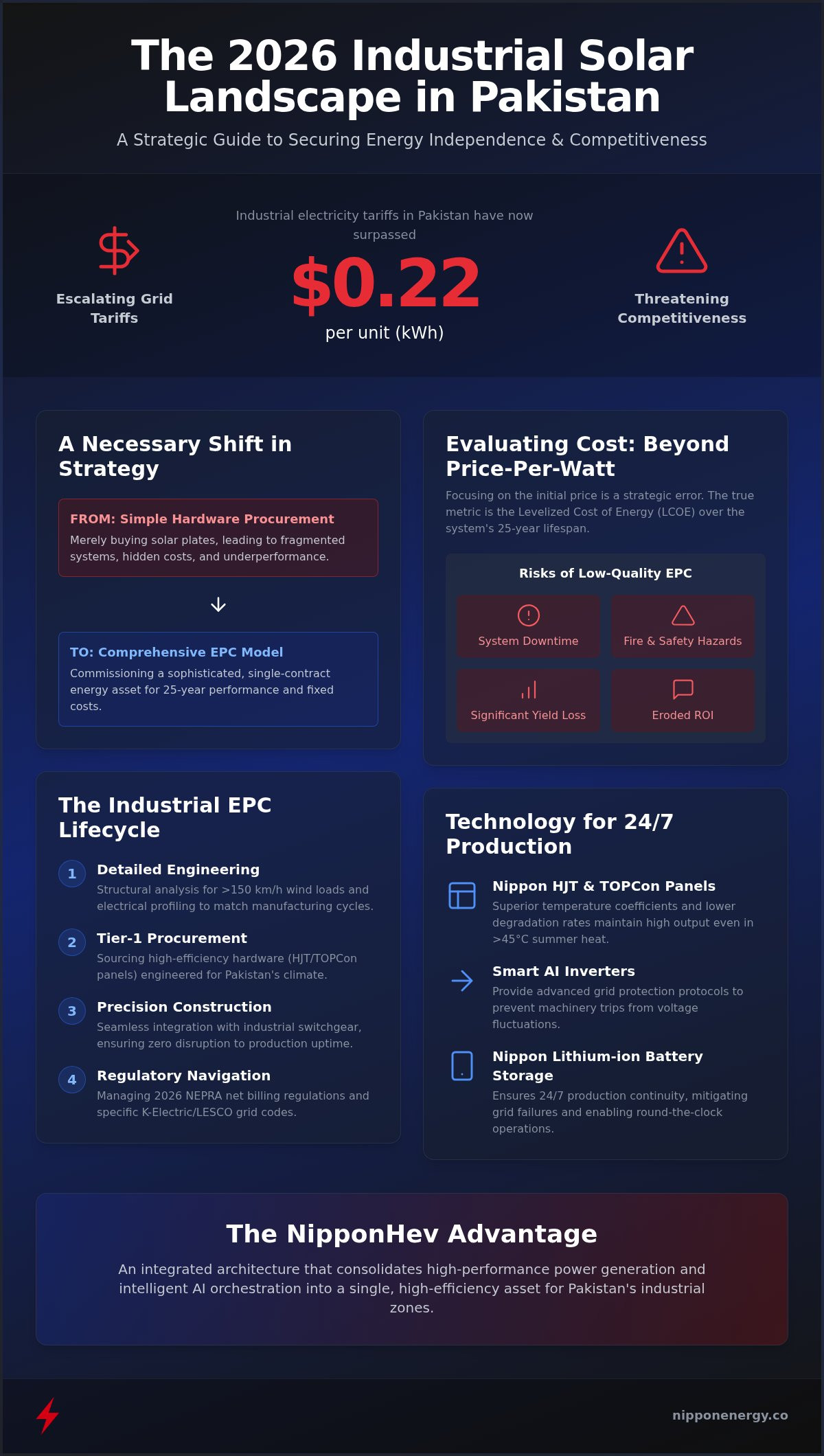
Industrial electricity tariffs in Pakistan have now surpassed $0.22 per unit, a threshold that fundamentally alters the financial feasibility of traditional manufacturing. You've likely concluded that relying on an unstable grid and escalating costs isn't a sustainable strategy for maintaining global competitiveness. This guide analyzes the industrial solar epc cost pakistan by focusing on the engineering of high-performance energy assets rather than simple hardware procurement.
We promise to demonstrate how HJT technology and AI-driven orchestration maximize yield per square foot while securing fixed energy costs for 25 years. You'll find a technical breakdown of the 2026 regulatory shift toward net billing and its impact on your investment. We also evaluate how Nippon Lithium-ion Battery Storage Systems and Smart AI Inverters ensure 24/7 production continuity. This analysis provides the data-driven clarity needed to transform your facility into a self-sustaining power hub that thrives despite grid volatility and rising operational overhead.
Key Takeaways
- Transition from simple hardware procurement to a comprehensive EPC model to hedge against 2026 industrial electricity tariffs exceeding $0.22 per unit.
- Evaluate the true industrial solar epc cost pakistan by prioritizing long-term Levelized Cost of Energy (LCOE) and the 25-year performance resilience of Nippon HJT Solar Panels.
- Deploy Smart AI Inverters and Nippon Lithium-ion Battery Storage Systems to maintain 24/7 production cycles and mitigate the risk of grid-induced machinery trips.
- Navigate the complexities of 2026 NEPRA net billing regulations and specific K-Electric or LESCO grid codes through a structured site audit and permitting process.
- Adopt the NipponHev integrated architecture to consolidate power generation and intelligent orchestration into a single, high-efficiency asset for industrial zones.
Defining the 2026 Industrial Solar EPC Landscape in Pakistan
Industrial solar Engineering, Procurement, and Construction (EPC) is a turnkey project delivery model designed for multi-megawatt assets. It consolidates every phase of a solar transition, from initial feasibility to final commissioning, into a single contract. In 2026, where grid electricity tariffs for industrial consumers have escalated beyond $0.22 per unit, this model has shifted from a sustainability initiative to a mandatory operational hedge. The evolution of Solar power in Pakistan reflects this change; factory owners are no longer merely buying solar plates. They're commissioning sophisticated energy infrastructure that functions as a primary power source.
Choosing an EPC partner provides single-point responsibility. This eliminates the coordination risk between separate equipment suppliers, mounting structure fabricators, and electrical contractors. When a megawatt-scale system underperforms, the factory owner has one point of contact to resolve technical discrepancies. This accountability is vital when analyzing the industrial solar epc cost pakistan, as fragmented installations often lead to hidden maintenance expenses that erode the initial investment. A professional EPC firm acts as a high-tech architect, ensuring that every component is engineered for the specific thermal and electrical demands of a manufacturing environment.
The Core Components of an Industrial EPC Contract
A professional EPC framework begins with detailed engineering. This involves high-resolution structural analysis of factory roofs to ensure they can sustain wind loads exceeding 150 km/h. It also includes electrical load profiling to synchronize solar output with fluctuating manufacturing cycles. The procurement phase focuses on high-efficiency hardware, such as Nippon TOPCon Solar Panels, which offer superior temperature coefficients for the local climate. Finally, precision construction ensures that the solar array integrates seamlessly with existing industrial switchgear without disrupting production uptime.
Why Residential-Grade Solutions Fail in Pakistani Factories
Residential-grade components aren't engineered for the harsh environments of Sindh or Punjab industrial zones. High ambient temperatures and heavy particulate matter from nearby manufacturing can cause generic panels to degrade rapidly. Industrial zones also present unique grid synchronization challenges; voltage fluctuations can cause inverter trips if the hardware lacks advanced protection protocols. Achieving 25-year operational stability requires Tier-1 hardware and industrial-spec balance-of-system components. Avoiding these sub-standard solutions is the most effective way to manage the long-term industrial solar epc cost pakistan.
Evaluating Industrial Solar EPC Costs: Beyond the Price Per Watt
Fixating on the initial price per watt is a common strategic error in industrial procurement. While Pakistan's Solar Boom has lowered entry barriers, it's also flooded the market with low-grade components that degrade prematurely in extreme local heat. The true industrial solar epc cost pakistan must be measured via the Levelized Cost of Energy (LCOE), which accounts for the total energy output over the system's entire life. Low-quality EPC projects often hide costs in the form of frequent system downtime, fire hazards from poor cable management, and significant yield loss. These failures don't just reduce ROI; they threaten the physical safety of the manufacturing facility.
Nippon HJT Solar Panels mitigate these risks by offering superior cell stability and a lower annual degradation rate. High-efficiency modules also reduce the required roof footprint. This minimizes the volume of mounting structures and electrical balance-of-system components, effectively lowering the overall structural load on the factory. If you're planning a megawatt-scale transition, it's vital to prioritize Solar Project Development and EPC standards that focus on long-term durability rather than just the lowest bid. Engineering excellence ensures that the investment remains an asset, not a liability.
The ROI Impact of HJT and TOPCon Technology
Temperature coefficients are critical for Lahore and Karachi summers, where ambient heat often exceeds 45°C. HJT technology maintains a much higher output during peak irradiance compared to traditional PERC cells, which lose efficiency rapidly as they heat up. Bifacial gains on industrial rooftops also maximize energy harvest from reflective surfaces, providing additional power from the same footprint. Analyzing the 30-year yield curve reveals that N-type cells retain significantly more capacity than traditional P-type cells. This creates a more stable energy hedge that protects against future grid price hikes. Property owners looking for this level of expertise in other regions can find professional solar PV installation services through Smart energi, which caters to both residential and commercial sectors.
Engineering precision dictates the daily production consistency of a factory. Optimized string sizing and DC/AC ratios prevent energy clipping, ensuring that every photon captured is converted into usable power for industrial machinery. Japanese-standard structural engineering prevents the array from becoming a liability during monsoon seasons. In the context of a 10MW industrial project, LCOE represents the total lifetime cost of the asset divided by its cumulative energy generation, serving as the ultimate metric for investment success. This focus on high-tier delivery is mirrored globally by groups like Impact Power, which specialize in business building for electricians to elevate the standards of local contractors.
Pakistani industrial clusters face unique grid instability that traditional solar setups cannot handle. Voltage sags and frequency shifts often cause expensive machinery trips in textile and automotive plants, leading to production downtime and hardware damage. Managing these fluctuations is a core component of the industrial solar epc cost pakistan. A smart ai solar inverter acts as a digital gatekeeper; it orchestrates energy flow in milliseconds to prevent back-feeding while maintaining a steady voltage for sensitive industrial loads. This prevents the "Zero Export" violations that many LESCO and K-Electric industrial consumers now face due to local transformer constraints.
This technical sophistication aligns with the current policy pathways for Pakistan's solar value chain, which advocate for moving toward intelligent, localized energy infrastructure. AI doesn't just monitor production; it balances solar, grid, and backup power in real-time. This orchestration ensures that manufacturing units maximize self-consumption, especially in zones where new net billing regulations have reduced the financial incentive for exporting power. By prioritizing intelligent energy architecture, factory owners transform a passive array of panels into a dynamic, managed asset that hedges against grid volatility.
Future-Proofing with Nippon Lithium-ion Battery Storage Systems
Peak shaving is no longer optional for high-volume manufacturers facing tiered electricity pricing. By utilizing lithium ion battery storage, factories can discharge stored solar energy during high-tariff evening hours. This strategy significantly reduces the monthly utility bill beyond what a simple grid-tied system can achieve. For sectors like pharmaceuticals or textiles, the UPS functionality is even more valuable. It provides a seamless transition during grid failures, preventing the catastrophic loss of production batches that occurs during even a five-second power interruption. This level of energy independence is essential for remote manufacturing units where grid reliability is lowest.
AI-Driven Performance Monitoring
Real-time visibility is the foundation of modern energy security. Cloud-based monitoring allows executives to track factory yield and system health across multiple sites from a single dashboard. AI algorithms identify potential faults, such as localized shading or string degradation, before they impact the bottom line. This predictive capability is a critical value-add within the industrial solar epc cost pakistan, ensuring the system operates at peak efficiency for decades. Furthermore, these systems provide automated reporting for corporate sustainability and ESG compliance, making it easier for Pakistani exporters to meet the stringent energy documentation requirements of international buyers.
The EPC Lifecycle: Implementing Solar in Pakistan’s Industrial Zones
The transition to a multi-megawatt solar asset requires a methodical execution framework to ensure structural safety and regulatory compliance. Unlike residential setups, the industrial solar epc cost pakistan includes specialized engineering phases that protect the manufacturer’s primary infrastructure. A standardized EPC lifecycle follows five critical stages. It begins with a comprehensive industrial site audit, utilizing thermal imaging and structural integrity assessments to verify roof load-bearing capacities. This is followed by custom design and NEPRA permitting, where engineers navigate the specific grid codes of LESCO, K-Electric, or other regional DISCOs. The procurement phase secures high-performance Nippon HJT and TOPCon hardware, leading into a precision installation designed for minimal operational disruption. The cycle concludes with commissioning and the activation of net metering or net billing protocols.
Executing these steps with technical precision prevents the long-term performance degradation that plagues sub-standard installations. Factory owners must treat solar as a 25-year energy asset rather than a temporary cost-saving measure. Professional Solar Project Development and EPC services ensure that every component, from the mounting rails to the smart AI inverters, is synchronized for maximum industrial yield. This structured approach mitigates the financial risks associated with poor grid synchronization and equipment failure.
Navigating NEPRA Regulations in 2026
The regulatory landscape for prosumers has evolved significantly with the introduction of the Prosumer Regulations 2026. New industrial connections now operate under a net billing framework, where exported electricity is credited at a rate reflecting current wholesale market conditions, typically around $0.03 to $0.04 per unit. Securing "Green Metering" status requires meticulous documentation and adherence to specific DISCO grid codes. The contract period for these new installations has been standardized to five years, necessitating a high-efficiency system that maximizes self-consumption to ensure rapid payback. Preparing technical dossiers for LESCO or FESCO approvals is a core EPC responsibility that prevents project delays.
Minimizing Factory Downtime During Construction
Maintaining production continuity is a primary concern during the installation of large-scale solar arrays. Professional EPC partners plan heavy lifts and electrical cut-overs around factory shift patterns, often performing critical tie-ins during scheduled maintenance windows. Safety protocols are paramount when working in high-voltage industrial environments; this includes rigorous earthing tests and fire-suppression integration. Phased commissioning allows portions of the solar array to go live while construction continues on other sections. This methodical rollout ensures that the factory maintains its output while the new energy infrastructure is integrated into the existing switchgear.
The NipponHev Advantage: Integrated Industrial Solar Solutions
The nipponhev system represents the pinnacle of integrated energy architecture. It's designed specifically for industrial parks and large-scale manufacturing facilities that require more than a simple rooftop array. Unlike fragmented installations where components from various manufacturers are forced to communicate, this unified ecosystem ensures that every node in the power chain is optimized for peak performance. This "High-Tech Architect" approach significantly reduces industrial investment risk by eliminating the technical debt associated with mismatched hardware. It ensures that the generation, storage, and management layers operate with a singular, high-efficiency logic.
Leveraging Japanese engineering standards provides the resilience required for the Pakistani climate. We've already analyzed the impact of thermal stress on generic hardware; Nippon Energy’s integrated solar epc services provide a solution specifically engineered for these environmental extremes. By consolidating all technical requirements into a single, orchestrated platform, manufacturers achieve a lower industrial solar epc cost pakistan through improved system uptime and higher lifetime yields. This architectural integrity transforms solar from a procurement item into a strategic industrial asset.
Long-Term Performance Architecture
System longevity depends on rigorous solar system maintenance. It's the only way to protect a 25-year asset from the abrasive dust and environmental stressors common in Punjab and Sindh industrial zones. Nippon Energy’s global support network, stretching from Tokyo to Lahore, provides a level of technical depth that local installers can't match. We conduct regular thermal audits to identify micro-fractures or hot spots before they escalate into production-halting faults. This proactive engineering ensures that the industrial plant maintains its projected ROI for its entire operational life without the hidden costs of unexpected hardware failure.
Initiating Your Industrial Energy Transition
Securing energy independence begins with a professional energy audit of your facility. This granular assessment identifies structural constraints, electrical bottlenecks, and opportunities for peak shaving using Nippon Lithium-ion Battery Storage Systems. Once the data is analyzed, we provide a customized turnkey proposal that outlines the technical specifications and projected financial outcomes for your specific site. Our team manages every regulatory hurdle and engineering challenge, providing a clear path to fixed energy costs. Partner with Nippon Energy to engineer your industrial future and secure a resilient power source for the next quarter-century.
Securing Your Industrial Energy Autonomy for 2026 and Beyond
The transition toward net billing and the escalation of grid tariffs to $0.22 per unit necessitate a shift from passive consumption to active energy orchestration. Investing in a multi-megawatt asset is no longer about finding the lowest upfront bid. It's about optimizing the industrial solar epc cost pakistan through high-efficiency Nippon HJT and TOPCon technology. These systems provide the thermal resilience required for local climate extremes while securing a predictable energy hedge for over two decades.
Japanese engineering standards ensure that every structural and electrical component meets the highest global benchmarks. By assuming end-to-end EPC responsibility, we provide a seamless transition that includes 25-year performance warranties and integrated AI monitoring. This technical precision protects your manufacturing cycles from grid volatility and ensures the highest possible yield per square foot. Request a Professional Industrial Energy Audit from Nippon Energy to begin engineering your facility’s future. Take control of your operational overhead with a system built for permanence and performance.
Frequently Asked Questions
What is the typical ROI for an industrial solar plant in Pakistan?
The payback period for a multi-megawatt asset typically ranges from 3 to 5 years, depending on your specific consumption profile and the total industrial solar epc cost pakistan. With grid electricity tariffs now exceeding $0.22 per unit, high self-consumption significantly accelerates the return on investment. Systems engineered with HJT technology provide superior yields in extreme heat, ensuring a more aggressive ROI compared to traditional P-type installations.
Does solar power interfere with heavy industrial machinery?
Professional EPC engineering ensures that solar integration does not disrupt heavy industrial loads. Utilizing Nippon Smart AI Inverters provides precise synchronization with the grid and prevents voltage fluctuations that could trip sensitive machinery. High-quality switchgear and harmonic filters are integrated during the construction phase to maintain power quality. This technical orchestration is essential for maintaining production continuity in textile, pharmaceutical, and automotive manufacturing environments.
What is included in a turnkey solar EPC contract for a factory?
A turnkey contract covers the entire project lifecycle, including structural site audits, electrical engineering, and procurement of high-efficiency hardware. It also encompasses physical installation, NEPRA permitting for net billing, and final commissioning. By assuming single-point responsibility, the EPC partner manages all coordination with regional DISCOs like K-Electric or LESCO. This comprehensive approach minimizes the investor's risk and ensures 25-year operational stability through a unified contract.
How long does the installation of a 1MW solar plant take in Pakistan?
A 1MW industrial installation typically requires 3 to 5 months from the initial site audit to final commissioning. This timeline includes approximately 4 to 6 weeks for detailed engineering and permitting, followed by 8 to 12 weeks for procurement and physical construction. Professional EPC firms utilize phased commissioning to allow portions of the array to go live early, effectively reducing the overall impact on the factory's production schedule.
Can I use HJT and TOPCon panels in high-dust industrial environments?
Nippon HJT and TOPCon panels are engineered for resilience in high-dust and high-temperature industrial zones. These modules feature advanced anti-soiling glass coatings that minimize particulate accumulation and simplify the cleaning process. While regular maintenance is required to maintain peak efficiency, their superior temperature coefficients ensure they maintain higher output than traditional panels even when covered in light industrial dust. This durability is critical for maintaining a stable energy hedge.
How do I manage net metering for my factory in Karachi or Lahore?
Managing net metering involves navigating the 2026 NEPRA Prosumer Regulations, which transitioned new industrial connections to a net billing framework. Your EPC partner handles the technical dossier preparation, equipment certification, and coordination with regional authorities like LESCO or K-Electric. This process includes upgrading to a bidirectional "Green Meter" and securing necessary licenses. Efficient management of this phase is a critical component of the overall industrial solar epc cost pakistan.
What maintenance is required for a large-scale industrial solar system?
Maintenance focuses on maximizing uptime through periodic thermal imaging, string testing, and inverter health checks. Regular panel cleaning is essential in Pakistan to prevent soiling losses, especially during the dry season. Nippon Energy provides Solar System Maintenance and Monitoring services that utilize AI-driven predictive fault detection. This proactive approach identifies potential micro-fractures or electrical discrepancies before they impact the facility's total energy yield or structural safety over its 25-year lifespan.
Will a turnkey solar plant work during a grid blackout?
Standard grid-tied solar plants shut down during blackouts for safety reasons, but systems integrated with Nippon Lithium-ion Battery Storage Systems provide full backup capability. These hybrid configurations allow your factory to operate independently from the grid during load shedding. Smart AI Inverters manage the transition to island mode in milliseconds, ensuring that critical production lines continue without interruption. This energy independence is vital for maintaining 24/7 industrial operations despite grid instability.


