
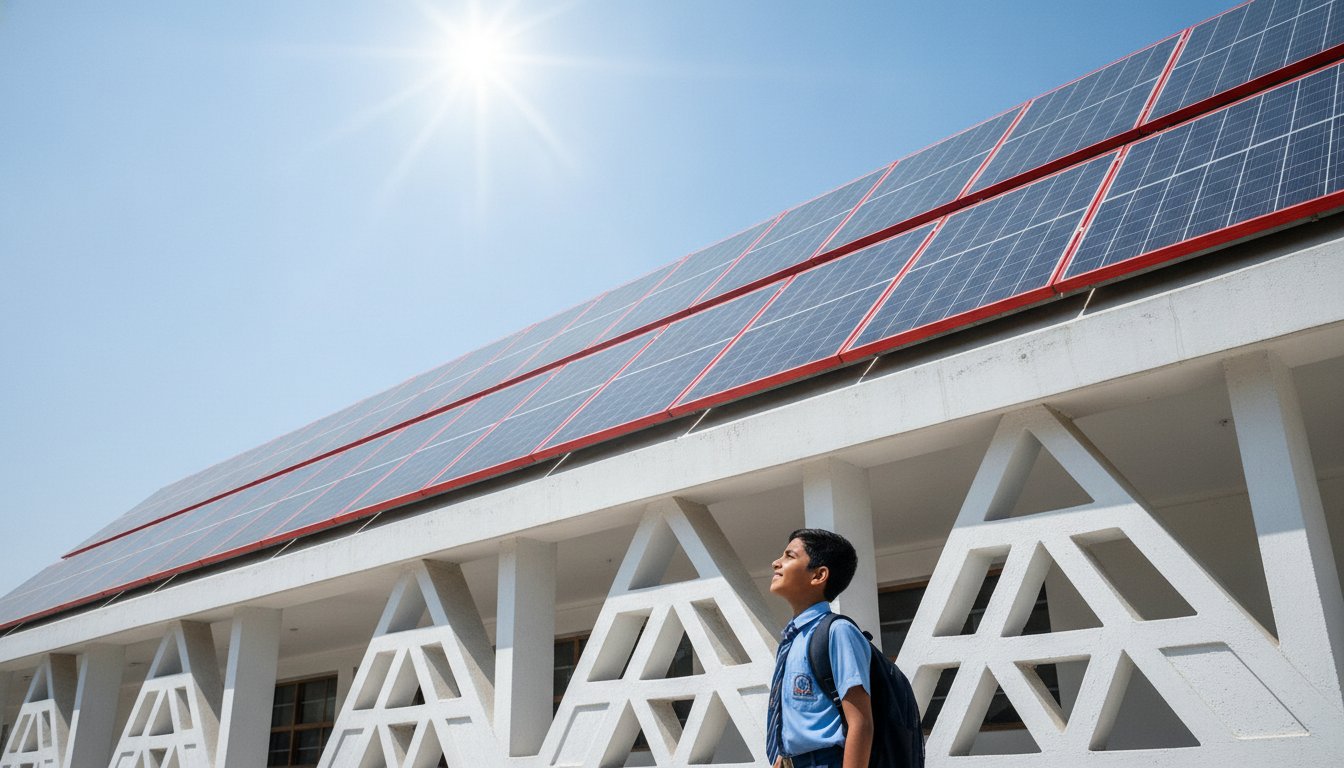
Can an educational institution in Pakistan achieve absolute energy independence when grid tariffs exceed Rs 50 per kWh and unpredictable load shedding frequently halts the learning process? You likely recognize that the combination of rising utility costs and extreme heat creates a volatile environment where student absenteeism rises and modern IT labs sit idle. Managing a school's operational budget is increasingly difficult when electricity expenses compete directly with academic resources. Implementing a robust solar system for school in pakistan is no longer just an environmental choice; it's a financial necessity for institutional survival.
This guide demonstrates how high-performance solar architecture, utilizing resilient Nippon HJT technology and AI-driven storage, can eliminate these disruptions and secure your institution's financial future for over 25 years. We'll examine the 2026 net billing regulations, the technical advantages of heat-tolerant N-type panels, and the strategic shift toward maximizing self-consumption to ensure your fans and servers never lose power. By transitioning to a structured, engineering-first energy model, your school can transform a recurring liability into a permanent, high-yield asset.
Key Takeaways
- Learn why high-temperature resilience is critical for institutional infrastructure and how Nippon HJT panels maintain peak efficiency in 45°C+ environments.
- Understand the transition to the 2026 net billing framework and its impact on the long-term financial viability of a solar system for school in pakistan.
- Discover how AI-managed storage systems eliminate classroom disruptions by providing 24/7 power for essential cooling and digital learning labs.
- Identify the core requirements of a professional EPC roadmap, from structural rooftop assessments to precise shadow analysis for maximum yield.
- Explore the NipponHev integrated architecture as a streamlined, future-proof solution for schools seeking immediate energy independence and reduced operational costs.
The Critical Role of Solar Energy in Pakistan’s Educational Infrastructure
In the contemporary educational environment, power stability isn't a luxury; it's the fundamental infrastructure that dictates academic success. The state of solar power in Pakistan has evolved rapidly, yet many schools still struggle with a grid that fails when it's needed most. When temperatures exceed 45°C, the lack of consistent electricity doesn't just disrupt a lecture; it compromises the physiological ability of students to retain information. A reliable solar system for school in pakistan establishes a technical foundation where learning isn't dictated by the limitations of a fragile utility grid.
The transition to digital literacy requires more than just hardware; it demands an unwavering energy supply. Modern IT laboratories and smart classrooms become expensive, idle assets during peak hours when grid electricity tariffs under 2026 regulations reach Rs 44-50 per kWh. Integrating a high-performance solar system for school in pakistan ensures these facilities remain operational, allowing institutions to maintain a rigorous, tech-forward curriculum without being penalized by fluctuating utility rates. This strategic infrastructure shift allows for the consistent use of high-draw equipment like servers and interactive displays, which are essential for 21st-century skill development.
Overcoming the Load Shedding Crisis
Scheduled and unscheduled outages create a fragmented academic calendar that prevents consistent syllabus completion. Relying on legacy diesel generators introduces secondary operational failures: excessive fuel costs, intrusive noise pollution, and frequent mechanical maintenance. Schools are shifting toward proactive energy independence to mitigate these risks entirely. By deploying high-efficiency solar arrays, administrators replace volatile fuel expenses with a predictable energy source that guarantees uptime for critical lighting and security systems.
Beyond fixed installations, institutions can also utilize portable energy units to support outdoor events or provide backup for specific classroom equipment; learn more about TheFallPark and their range of portable solar power stations.
Thermal Regulation and Student Performance
Heat stress directly impacts cognitive function. When indoor temperatures rise, the body's physiological effort to regulate its core temperature diverts energy away from the brain's executive functions. Fans and high-efficiency cooling systems are essential engineering components of a modern classroom. Providing a stable thermal environment through solar-powered cooling directly correlates with higher academic engagement. By ensuring classrooms remain at manageable temperatures throughout the peak summer months, schools can significantly reduce student absenteeism caused by heat-related exhaustion and illness.
Engineering the Ideal Solar Architecture for Educational Facilities
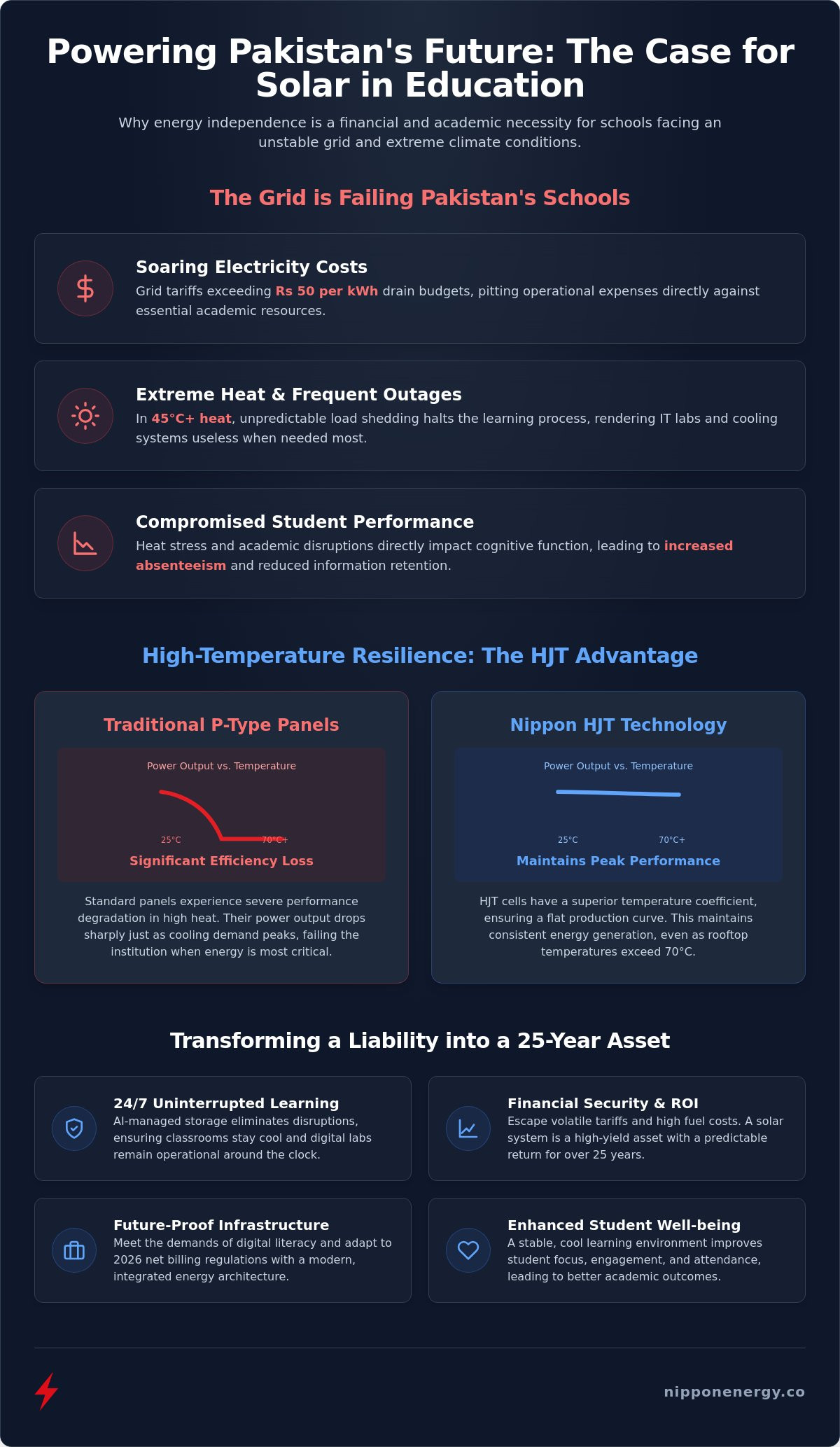
Standard retail solar solutions often fail in the Pakistani climate because they lack the thermal resilience required for institutional operation. In high-temperature zones where ambient air reaches 45°C, surface temperatures on rooftops can exceed 70°C. Traditional P-type panels experience significant efficiency drops under these conditions, leading to a direct loss of power during the hottest hours when cooling demand is highest. A high-performance solar system for school in pakistan utilizes Nippon HJT Solar Panels to maintain output when legacy systems degrade. This architectural choice ensures that the energy yield remains consistent with the school's peak load requirements.
Managing heavy inductive loads, such as centralized air conditioning and high-RPM fans, requires more than just raw power generation. It demands intelligent distribution. Nippon Smart AI Inverters analyze load patterns in real time to prevent surges and optimize consumption. This precision engineering prevents equipment damage and ensures that sensitive IT laboratory hardware receives a stable voltage. For administrators, this means moving away from generic hardware toward a synchronized energy ecosystem designed for longevity. You can explore our custom EPC solutions to see how these components integrate into a unified facility management plan.
High-Temperature Resilience: HJT vs. Traditional Technology
The technical advantage of HJT technology lies in its superior temperature coefficient. While standard panels lose significant wattage for every degree above 25°C, HJT cells maintain a much flatter production curve. This resilience is amplified by bifacial gain, where the rear side of the panel captures reflected light from school rooftops to increase total energy harvest by up to 25%. Evidence from the Asian Development Bank's solar schools project confirms that high-spec installations provide more reliable long-term returns in the Indus Plain's extreme climate. N-type cell architecture further ensures that the system doesn't suffer from Light Induced Degradation, preserving your investment for decades.
Energy Storage: Moving Beyond Lead-Acid
In 2026, lithium ion battery storage has become the only viable choice for educational institutions. Legacy lead-acid batteries fail within two years due to high depth-of-discharge cycles and thermal instability. Lithium-ion systems offer a 10 year operational life and can handle 6,000 plus cycles without significant capacity loss. These units feature AI-enhanced battery management systems that monitor internal cell temperatures, preventing overheating during peak summer months. This level of technical sophistication guarantees that your solar system for school in pakistan provides 24/7 power without the recurring replacement costs associated with older battery technologies.
Financial Viability: ROI and Operational Savings for Schools
Educational budgeting in Pakistan faces a severe challenge as grid electricity tariffs reach Rs 44-50 per kWh. For many institutions, energy costs have become the second-highest expenditure after faculty salaries. Investing in a solar system for school in pakistan reclassifies this monthly liability into a long-term capital asset. While the 2025-2026 budget introduced an 18% GST on imported panels, the current market price of Tier-1 N-type bifacial modules remains historically low at approximately Rs 40-45 per watt. This pricing structure allows schools to lock in their energy costs for the next quarter-century, effectively insulating the institution from future grid price hikes and inflation.
The reduction in 'cost per student' is the most significant metric for institutional success. By eliminating a substantial portion of the monthly utility bill, administrators can reallocate funds toward academic enhancements, such as advanced digital laboratories and staff retention programs. This shift from a consumption-based budget to an investment-based model ensures that the school's financial health is no longer tied to the volatility of the national energy market. High-quality hardware choices, specifically those utilizing N-type cell technology, ensure that the maintenance-to-yield ratio remains favorable over the system's 25-year lifespan.
Net Metering and NEPRA Regulations
Under the Prosumer Regulations 2026, the financial strategy for institutional solar has shifted from simple export to intelligent self-consumption. The new net billing framework compensates schools at approximately Rs 11 per kWh for excess energy sent to the grid. Because the cost of drawing power from the grid remains nearly five times higher than the export credit, the highest ROI is achieved through hybrid configurations that prioritize on-site usage. Schools can effectively 'bank' energy credits during summer holidays, which are then applied to reduce the costs of high-consumption months when the full student body is present.
Budgeting for Solar: CAPEX vs. OPEX
Evaluating the total cost of ownership requires a shift from viewing solar as a simple purchase to seeing it as a 25-year infrastructure project. The payback period has extended to 10-12 years under the latest regulatory framework, yet the operational savings over the remaining lifespan of the system are monumental. Protecting this investment requires a rigorous solar system maintenance schedule to prevent efficiency loss from dust accumulation and heat degradation. Schools can explore financing through the SBP Refinance Scheme at a 6% markup or commercial KIBOR-linked rates to manage the initial capital expenditure while reaping immediate operational benefits.
Implementation Roadmap: From Site Survey to EPC Execution
Executing a high-performance solar system for school in pakistan involves a methodical engineering cycle that begins long before the first module is mounted. Institutional projects differ from residential installations because they must sustain high-draw loads during peak daylight hours while ensuring the structural safety of the campus environment. A professional roadmap ensures that technical specifications align with academic requirements, preventing system underperformance or structural failure. The execution process follows five critical phases:
- Phase 1: Professional site feasibility and 3D shadow analysis to determine optimal panel placement.
- Phase 2: Structural integrity assessment of school rooftops to ensure they can sustain wind loads and mounting hardware.
- Phase 3: Custom system sizing based on granular load data from fans, lighting, and digital IT laboratories.
- Phase 4: Deployment of professional solar EPC services for procurement and technical installation.
- Phase 5: Commissioning and staff training to ensure facility managers can utilize AI monitoring platforms effectively.
The Importance of Feasibility Studies
Generic solar kits often fail in institutional settings because they don't account for the unique micro-climates of school campuses. A professional feasibility study evaluates roof orientation and identifies obstructions such as nearby trees, minarets, or telecommunication towers that cause partial shading. This data is critical because even minor shading can significantly reduce the output of an entire string of panels. Before sizing the system, an electrical audit is conducted to identify inefficient legacy appliances. Replacing old bulbs with high-efficiency LEDs and upgrading to inverter-based fans reduces the total load, allowing for a more cost-effective solar system for school in pakistan.
Selecting a Solar EPC Partner in Pakistan
Choosing an EPC (Engineering, Procurement, and Construction) partner is a decision that impacts the school's operational stability for the next 25 years. Administrators should prioritize partners who offer turnkey solutions and utilize Tier-1 hardware with proven high-temperature resilience. Professional solar EPC services provide a single point of accountability, managing everything from NEPRA net-metering applications to structural engineering. Post-installation support is equally vital; modern systems integrate AI-driven platforms that provide 24/7 monitoring and predictive maintenance alerts. To ensure your project meets these rigorous technical standards, you should schedule a professional site feasibility audit with an established engineering team.
Future-Proofing Education with Nippon Energy’s Advanced Solutions
Securing the energy future of an educational institution requires a shift from fragmented hardware procurement to integrated system architecture. The NipponHev system represents this evolution, providing a turnkey energy solution designed specifically for the rigorous demands of Pakistani schools. By synchronizing high-efficiency HJT panels with intelligent storage and advanced power management, this integrated platform eliminates the compatibility failures common in piecemeal installations. Implementing a comprehensive solar system for school in pakistan ensures that the institution remains a stable environment for learning, regardless of external grid volatility or rising utility tariffs.
The core of this reliability lies in Japanese engineering standards adapted for South Asian environmental extremes. While standard equipment often succumbs to thermal stress and high-voltage fluctuations, our components are built for durability and precision. The integration of Smart AI solar inverters allows for sophisticated load balancing, where the system automatically prioritizes critical infrastructure like IT labs and cooling units during periods of low solar irradiance. This intelligent orchestration ensures that energy is never wasted and essential services always remain online, providing a level of operational security that traditional systems cannot match.
Nippon Energy’s Local Impact in Pakistan
Our established presence in Lahore and Karachi ensures that every solar system for school in pakistan is backed by localized engineering expertise and rapid-response support. We don't just supply equipment; we act as a High-Tech Architect for South Asian schools, designing energy systems that respect the structural and climatic nuances of the region. This local footprint allows us to provide long-term warranty fulfillment and on-site technical maintenance, ensuring that your investment continues to perform at peak efficiency for its entire 25-year lifespan. Our regional teams understand the specific challenges of dusty urban environments and coastal humidity, applying specialized maintenance protocols to protect your hardware from localized degradation.
Getting Started with Your School’s Solar Project
Transitioning to energy independence begins with a granular understanding of your campus's current consumption profile. Requesting a professional energy audit is the first step toward custom-sizing a NipponHev system that fits your specific load requirements and budgetary constraints. Our specialist team conducts comprehensive feasibility consultations, evaluating everything from rooftop load-bearing capacity to future expansion needs for new campus buildings. By partnering with a global pioneer, your school secures a permanent energy asset that empowers the next generation of students. Contact our technical department to initiate your site feasibility assessment and begin the journey toward institutional energy autonomy.
Securing the Next Generation of Educational Infrastructure
Transitioning to a high-performance solar system for school in pakistan is a strategic move toward institutional resilience. We've established that 2026 energy independence requires more than just hardware; it demands a synchronized energy ecosystem. By integrating Japanese HJT technology with AI-driven energy management, schools can eliminate the operational risks of load shedding while maintaining stable thermal environments for students. Our local EPC expertise in Lahore and Karachi ensures that every installation is engineered for the unique challenges of the Indus Plain. This architecture transforms a volatile utility expense into a permanent, high-yield capital asset.
Protecting the academic continuity of your students is no longer dependent on a fragile grid. Through methodical planning and high-temperature resilient technology, your facility can achieve a 25-year lifecycle of reliable power. Request a Professional Solar Feasibility Study for Your School to begin the process of facility modernization. Your path to energy autonomy starts with a single technical audit, ensuring your institution remains a beacon of progress for decades to come.
Frequently Asked Questions
How much does a solar system for a school in Pakistan cost?
The total investment for a solar system for school in pakistan depends on the institutional load profile and the specific engineering requirements of the campus. While the 2025-2026 budget introduced an 18% GST on imported components, the per-watt price of Tier-1 N-type bifacial modules remains competitive at approximately Rs 40-45. Schools should prioritize the total cost of ownership over 25 years rather than initial capital expenditure to ensure long-term financial viability.
What is the best solar panel technology for high-temperature regions like Sindh and Punjab?
Heterojunction (HJT) technology is the superior choice for the extreme thermal environments of Sindh and Punjab. These panels feature a lower temperature coefficient than traditional P-type cells, which allows them to maintain high energy conversion rates even when ambient temperatures exceed 45°C. This thermal resilience prevents the mid-day power drops that often plague legacy solar installations in Pakistan's southern regions.
How long does the installation of a school solar system take?
A standard institutional solar deployment typically requires three to six weeks from the initial feasibility study to final commissioning. This timeline includes structural rooftop assessments, procurement of high-performance hardware, and the technical integration of AI inverters. Large-scale campuses with complex electrical distribution networks might require additional time for synchronized load testing and staff training on monitoring platforms.
Can a school sell excess solar energy back to the grid in Pakistan?
Educational institutions can export surplus electricity to the national grid under the NEPRA Prosumer Regulations 2026. This net billing framework allows schools to earn credits at approximately Rs 11 per kWh for energy exported during summer holidays or weekends. These credits are applied against the school's grid consumption during high-occupancy periods, which significantly reduces the net annual utility expenditure for the institution.
What maintenance is required for a school solar system in dusty environments?
Dust accumulation on solar arrays can reduce energy yield by up to 30% in arid Pakistani climates. Effective maintenance requires a structured cleaning schedule every 10 to 14 days to prevent soiling losses. Utilizing deionized water and soft-bristle equipment protects the panel surfaces from micro-scratches; this ensures the system maintains its peak generation efficiency throughout its operational life.
Will solar power run school air conditioners and IT labs during load shedding?
A properly engineered solar system for school in pakistan will power high-draw inductive loads like air conditioners and IT servers during grid outages. This is achieved through hybrid inverter technology and lithium-ion storage that provides instantaneous backup. AI-driven load management ensures that critical cooling and digital infrastructure receive priority power distribution when solar irradiance is low or the grid is unavailable.
What is the lifespan of Nippon Lithium-ion battery storage in Pakistan's climate?
Nippon Lithium-ion battery storage systems are designed to provide over 6,000 charge cycles, which equates to an operational lifespan of approximately 10 years. Unlike legacy lead-acid batteries that often degrade within 24 months in high-heat environments, lithium-ion chemistry maintains capacity at higher depths of discharge. This durability makes it the only technically viable storage solution for the 2026 energy landscape.
Does the government of Pakistan provide subsidies for school solar projects?
The Government of Pakistan and various provincial authorities support institutional solarization through dedicated financing schemes and public-sector projects. The State Bank of Pakistan (SBP) offers a Refinance Scheme for Renewable Energy with a 6% markup rate for eligible institutions. Additionally, specific initiatives in the Punjab and Federal areas have successfully converted hundreds of schools to solar power through government-funded programs.


