
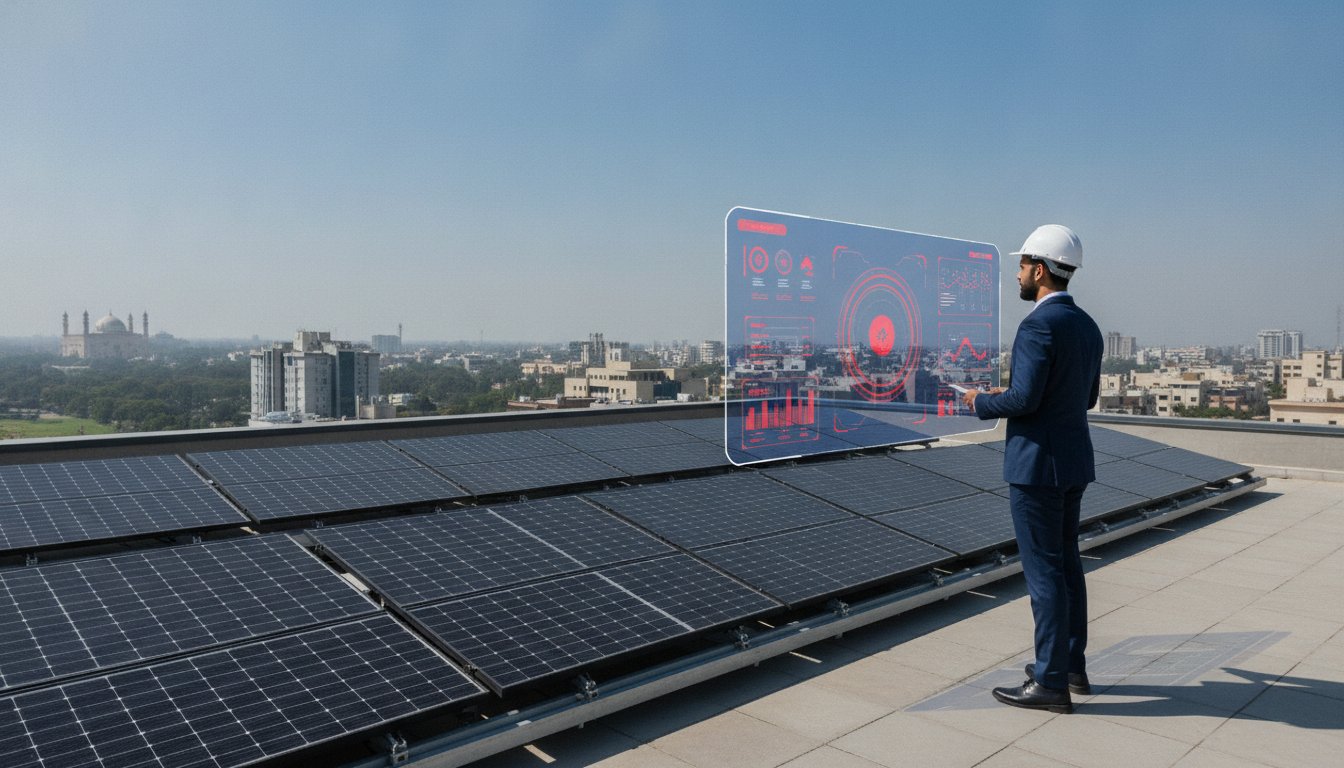
In 2026, the traditional strategy of oversizing solar arrays to export power has officially become an obsolete financial model for Lahore's hospitality sector. With the shift to the NEPRA Prosumer Regulations 2026, implementing hotel solar power solutions lahore now requires a precise focus on intelligent self-consumption and heat-resilient architecture. You're likely facing the dual pressure of LESCO commercial tariffs reaching Rs. 33.25 per unit while standard panels lose significant output during Lahore's 45°C summer peaks. It's a difficult reality when guest comfort depends on 24/7 climate control that the aging grid cannot reliably provide.
This guide demonstrates how advanced HJT technology and AI-driven storage systems are revolutionizing energy ROI by prioritizing high-temperature performance and operational continuity. You'll discover how to navigate the new net billing framework where the buyback rate has dropped to approximately Rs. 11 per unit. We will analyze why lithium-ion integration is now the critical component for maintaining 5-star service standards and explore the technical specifications that allow modern systems to thrive in extreme urban heat.
Key Takeaways
- Analyze the financial impact of 2026 LESCO commercial tariff escalations and learn how to neutralize peak-hour surcharges through strategic self-consumption.
- Understand why Nippon HJT panels are essential for Lahore’s climate, maintaining high performance where standard systems suffer significant efficiency loss.
- Discover how modern hotel solar power solutions lahore utilize AI-driven inverters and Lithium-ion storage to automate load balancing for critical HVAC systems.
- Explore the precision EPC process, including 3D site modeling and technical feasibility studies, to future-proof large-scale hospitality investments.
- Learn the importance of proactive solar system maintenance and 24/7 performance monitoring in securing long-term energy independence and ROI.
The Economics of Solar Power for Lahore’s Hospitality Sector
The hospitality industry in Punjab faces a structural shift in operational overhead as energy costs move from a manageable expense to a primary threat to profit margins. Implementing hotel solar power solutions lahore is no longer a luxury for eco-conscious brands; it's a strategic necessity for fiscal survival. The broader solar power landscape in Pakistan has matured rapidly, transitioning from early-stage adoption to a sophisticated infrastructure capable of supporting heavy commercial loads. For hotels, this transition represents a move away from the volatility of traditional energy procurement toward a fixed-cost model that stabilizes the bottom line for decades.
LESCO Grid Challenges and the 2026 Tariff Landscape
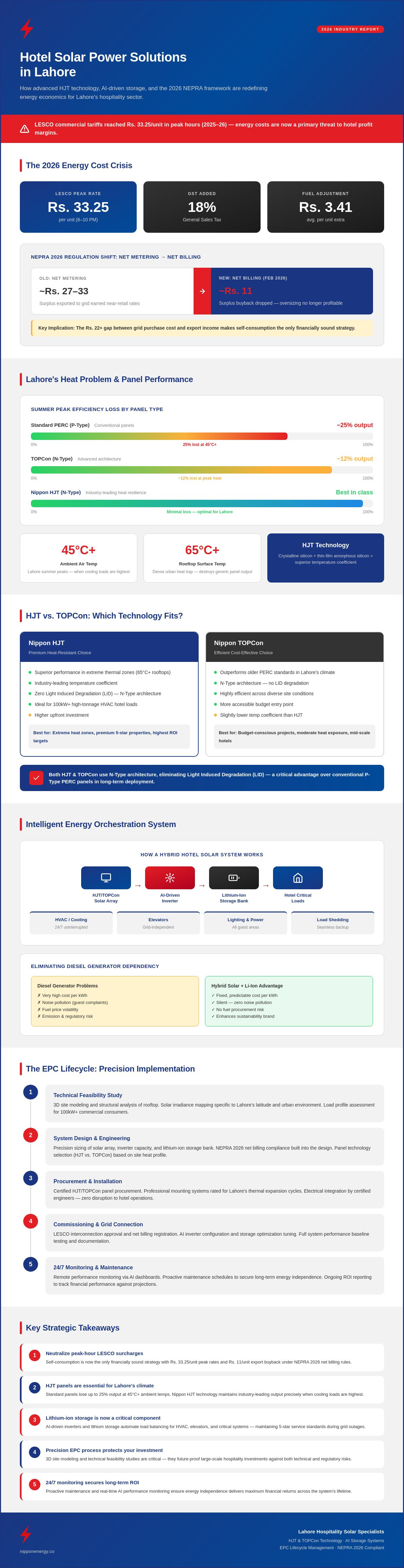
Current LESCO commercial tariffs for the 2025-26 fiscal year range from Rs. 27.50 to Rs. 33.25 per unit during peak hours. When you factor in the 18% General Sales Tax and an average Fuel Price Adjustment of Rs. 3.41 per unit, the effective cost of energy becomes a monumental burden for 100kW+ consumers. During the 6 PM to 10 PM peak window, costs escalate rapidly. Facilities that rely solely on the grid remain vulnerable to the February 2026 NEPRA Prosumer Regulations, which shifted the market from net metering to net billing. Under this new framework, surplus electricity exported to the grid earns approximately Rs. 11 per unit. This pricing delta creates a powerful economic incentive for hotels to prioritize self-consumption through intelligent system sizing and storage.
Energy Security as a Competitive Advantage
Operational continuity is the cornerstone of guest satisfaction. Traditional reliance on the grid often necessitates expensive diesel generators during load shedding, which significantly increases the price per kilowatt-hour and introduces noise pollution. A hybrid solar architecture integrates battery storage to ensure that critical systems, such as elevators and 24/7 HVAC, remain functional without interruption. This reliability directly influences online ratings and brand loyalty. Guests in 2026 expect seamless comfort; providing it through sustainable means enhances the hotel's market position. For instance, hotels can further distinguish themselves by offering digital convenience through services like Plug n Play, which allows guests to easily manage gaming top-ups and vouchers during their stay. By eliminating the dependency on unstable grid cycles, hospitality leaders secure both their guest experience and their long-term financial stability. This technical evolution transforms a hotel from a passive energy consumer into a resilient, self-sufficient power producer.
Heat-Resilient Architecture: Why HJT and TOPCon are Essential for Lahore
Standard photovoltaic modules often succumb to the "Heat Trap" effect, where efficiency drops by up to 25% during summer peaks, rendering many generic hotel solar power solutions lahore ineffective when cooling loads are highest. In the dense urban environment of Lahore, rooftop temperatures frequently exceed 65°C. Conventional P-type PERC cells experience significant power degradation under these conditions, which undermines the financial projections of a hospitality project. To counteract this thermal barrier, Nippon Energy utilizes advanced N-type cell architectures that maintain structural and electrical stability at extreme temperatures.
Nippon HJT Solar Panels represent the pinnacle of this heat-resilient engineering. By combining crystalline silicon with thin-film amorphous silicon, Heterojunction (HJT) technology achieves an industry-leading temperature coefficient. This technical feature ensures that as ambient heat rises, the power output remains significantly higher than traditional panels. As outlined in Pakistan's national renewable energy policy, the transition toward high-efficiency technologies is a critical pillar for national energy security. For a hotel, this translates to a reliable energy harvest during the most demanding hours of the day, directly supporting high-tonnage HVAC systems without grid supplementation.
HJT vs. TOPCon: Selecting the Right Technology
Choosing between Nippon HJT and topcon solar panels requires an analysis of specific site conditions and budget parameters. While both utilize N-type architecture to eliminate Light Induced Degradation (LID), HJT offers superior performance in the most extreme thermal zones. TOPCon technology provides a highly efficient, cost-effective alternative that still outperforms older standards in Lahore's climate. Both technologies utilize bifacial glass-on-glass construction, which captures reflected light from rooftop surfaces to provide a bifacial gain of up to 30%. This dual-sided generation is particularly effective on the white-reflective or light-colored rooftops common in Lahore's commercial sector.
Structural Integrity and Wind Loading
Lahore's environmental challenges extend beyond heat to include high dust levels and intense monsoon wind loads. Our mounting systems are engineered with high-grade, corrosion-resistant materials to withstand urban humidity and pollutants. Precision manufacturing ensures that every racking component can handle the specific wind pressures of the Punjab region. This focus on structural durability prevents micro-cracks in the cells, which are a common cause of long-term power loss in inferior installations. If you're planning a large-scale transition, a technical audit of your rooftop's load-bearing capacity is a vital first step. You can consult with our engineering team to determine the optimal structural configuration for your facility.
Intelligent Energy Orchestration: AI Inverters and Lithium Storage
Modern hotel solar power solutions lahore have evolved from passive energy collectors into active, intelligent assets. In 2026, the primary challenge for hospitality energy management isn't just generation; it's orchestration. A standard inverter simply converts DC to AC, but a smart ai solar inverter serves as a central processor that directs energy flow based on real-time load profiles. This intelligence is vital for mitigating the impact of the 6 PM to 10 PM peak window, where grid costs are at their highest. By automating energy distribution, hotels ensure that surplus power isn't exported at the low Rs. 11 buyback rate but is instead stored or used to offset expensive grid units.
This shift toward self-sufficiency aligns with Pakistan's renewable energy goals, which target a 60% renewable mix by 2030. For a commercial facility, AI-driven orchestration enables dynamic load balancing. The system prioritizes critical infrastructure like refrigeration, lighting, and server rooms during grid instability, ensuring that the guest experience remains seamless. This predictive capability allows the facility to anticipate energy surges and adjust consumption patterns before they trigger high-demand surcharges. Real-time monitoring provides the data necessary to optimize yield, allowing engineers to predict maintenance needs before they impact performance.
To further refine internal energy efficiency, hotels can integrate smart control systems at the room level. For example, Senic offers wireless, battery-free solutions compatible with major smart home ecosystems, allowing for precise lighting management without the need for complex wiring.
AI-Driven HVAC Management
Cooling systems represent the largest energy drain for Lahore’s hotels. Smart inverters synchronize with central HVAC units to smooth out start-up surges and modulate power consumption based on guest occupancy. By integrating the nipponhev system, hotels achieve a unified energy architecture that manages transitions between solar, battery, and grid power without voltage fluctuations. This precision prevents equipment wear and ensures that climate control remains stable even during rapid weather shifts or grid load-shedding cycles. The system uses local weather forecasts to pre-cool buildings during peak solar production, significantly reducing the load during evening hours.
The Superiority of Lithium-Ion in Hospitality
For 24/7 hospitality operations, lithium ion battery storage is the only engineering choice that offers the necessary cycle life and discharge depth. Lead-acid alternatives lack the energy density and thermal management required for large-scale urban installations. Nippon Lithium-ion Battery Storage systems utilize high-density chemistry to provide maximum reserves within a compact footprint, which is essential for hotels with limited utility room space. These systems include advanced safety protocols and thermal management to maintain optimal temperatures, ensuring that the energy stored during the day is available for peak shaving at night. This technical approach transforms a hotel into a resilient energy island, protecting operational continuity and long-term ROI.
The EPC Lifecycle: Implementing Solar with Precision
Success in large-scale hospitality solar hinges on more than hardware selection; it requires a disciplined execution of the Engineering, Procurement, and Construction (EPC) lifecycle. Partnering with a professional solar epc services provider ensures that every technical variable, from structural load-bearing to grid-code compliance, is managed with mathematical precision. For hotel solar power solutions lahore, this lifecycle bridges the gap between a conceptual energy model and a high-performance physical asset. A fragmented approach to installation often leads to micro-cracks or electrical inefficiencies that compromise the system's 25-year lifespan.
Feasibility and Shadow Analysis in Urban Lahore
The urban density of areas like Gulberg and Mall Road presents unique challenges for photovoltaic yield. High-rise shading and localized urban dust can reduce generation by significant margins if not accounted for during the design phase. We utilize 3D site modeling to conduct rigorous shadow analysis, ensuring that panel placement maximizes sun exposure throughout the seasonal cycle. For older hotel structures, a comprehensive structural load assessment is mandatory to verify that rooftop slabs can support the weight of HJT modules and wind-resistant mounting systems. This data feeds into a sophisticated financial model that determines the Internal Rate of Return (IRR) and the Payback Period (PBP), providing owners with a transparent roadmap for their investment.
Regulatory Compliance and Net Metering
Navigating the LESCO net metering landscape in 2026 requires an expert understanding of the latest NEPRA Prosumer Regulations. The transition from net metering to net billing has introduced new complexities in utility interconnection and grid-code requirements. Our team manages the entire regulatory workflow to ensure your facility remains compliant with national standards. This process involves several critical milestones:
- Preparation and submission of the three-phase net metering application to LESCO.
- Verification of all system hardware against the latest Pakistan grid-code standards.
- Coordination with utility officials for the physical installation and testing of the 'green meter'.
- Final commissioning and synchronization of the AI-driven inverter system with the local grid.
Precision installation is the final pillar of the EPC lifecycle. Every electrical connection and mounting bolt is installed according to international engineering standards to prevent long-term degradation or safety risks. Rigorous commissioning involves stress-testing the system under various load conditions to ensure that the transition between solar, battery storage, and grid power is seamless. To begin your facility's transition with a technical feasibility study, request a consultation with our EPC engineering team.
Nippon Energy: Your Partner in Solar Excellence
Nippon Energy positions itself as the definitive technical partner for the hospitality sector, applying Japanese engineering heritage to the specific environmental stressors of the Punjab region. Selecting hotel solar power solutions lahore requires a commitment to longevity that transcends the initial installation phase. Our methodology integrates proprietary HJT technology with a localized execution strategy, ensuring that every megawatt-hour generated contributes to a predictable ROI. By serving as both a manufacturer and an EPC leader, we maintain a singular standard of excellence across the entire energy value chain. We don't just install panels; we architect resilient energy ecosystems that protect your bottom line.
Effective energy architecture relies on continuous optimization and technical oversight. Our solar system maintenance protocols utilize 24/7 digital monitoring to identify performance anomalies before they escalate into operational downtime. This proactive approach is essential in Lahore's high-soiling environment, where dust accumulation can silently erode guest satisfaction by limiting power availability for climate control. Our Lahore-based engineering teams provide rapid-response technical support, ensuring that the specialized needs of 5-star facilities are met with professional urgency. A recent project for a prominent Lahore hotel demonstrated the efficacy of this model, achieving an 80% reduction in grid dependency through a synchronized HJT and Lithium-ion deployment.
Global Standards, Local Execution
We combine international manufacturing precision with a granular understanding of the local LESCO infrastructure. Professional Operations and Maintenance (O&M) services are the primary mechanism for protecting your 25-year investment. Our structural integrity standards ensure that every racking system and electrical enclosure is built to withstand the rigors of urban humidity and monsoon cycles. This focus on durability transforms solar from a depreciating asset into a permanent pillar of a hotel's financial stability. Our engineers calibrate every Smart AI Inverter to the specific harmonic profile of your building, reducing electrical stress and extending the life of your appliances.
Next Steps for Hotel Energy Independence
The transition toward energy autonomy begins with a comprehensive technical audit and load profile analysis. We analyze your facility's specific energy consumption patterns and architectural constraints to design a customized NipponHev system. This integrated architecture provides a scalable roadmap for reducing operational overhead while enhancing your brand’s sustainability profile in a competitive market. Our team utilizes 3D modeling to simulate energy yield, providing you with a transparent data set to inform your capital expenditure decisions. To secure your facility's energy future and eliminate the risk of rising grid costs, Contact Nippon Energy’s Lahore Office for a Professional Feasibility Study.
Architecting Your Facility’s Energy Independence
The transition to the 2026 energy landscape requires a strategic shift from passive consumption to active energy orchestration. By integrating Japanese Engineered HJT Technology with high-density Lithium-ion storage, hospitality leaders can neutralize the impact of rising LESCO tariffs and the current net billing framework. These advanced hotel solar power solutions lahore don't just provide power; they offer a sophisticated defense against thermal degradation and grid instability. Success depends on a unified approach that combines localized Lahore EPC expertise with AI-driven energy orchestration to ensure maximum yield during summer peaks.
This structural evolution protects your long-term margins while elevating your brand’s reputation for sustainable excellence. It's time to move beyond the limitations of the traditional grid and secure a stable, self-sufficient future for your facility. You can begin this transformation by leveraging professional engineering standards that prioritize precision and durability above all else. Secure Your Hotel's Energy Future with Nippon Energy's Turnkey Solutions and lead the hospitality sector into a new era of reliability.
Frequently Asked Questions
What is the average payback period for a 100kW solar system for a hotel in Lahore?
The payback period for commercial hotel solar power solutions lahore typically ranges between 10 to 12 years under the NEPRA Prosumer Regulations 2026. This timeline is driven by the shift from net metering to net billing, where surplus energy is credited at approximately Rs. 11 per unit. Hotels that prioritize high daytime self-consumption for HVAC and laundry services often see an accelerated return on investment compared to facilities that export most of their generation.
Can Nippon HJT panels really withstand Lahore's 50°C summer peaks without losing efficiency?
Nippon HJT panels are engineered with an industry-leading temperature coefficient that minimizes output degradation during extreme heat. While all solar panels experience some efficiency loss as temperatures rise, Heterojunction technology maintains significantly higher power levels than standard P-type modules at 45°C and above. This resilience ensures that your facility captures maximum energy when cooling demands are at their highest during the Punjab summer.
How does net metering work for commercial consumers under LESCO in 2026?
As of February 2026, LESCO has transitioned from traditional net metering to a net billing framework. Under this system, any solar energy you consume in real-time offsets your bill at the full commercial tariff rate, which can reach Rs. 33.25 per unit. Any excess electricity exported to the grid is purchased by LESCO at a lower energy rate, making it more financially beneficial to store surplus power in lithium-ion systems for use during evening peak hours.
Is lithium-ion storage safer than traditional lead-acid for large hotel installations?
Nippon Lithium-ion Battery Storage systems offer superior safety through integrated thermal management and advanced battery management systems (BMS). Unlike lead-acid batteries, which require frequent maintenance and ventilation for off-gassing, lithium-ion units are sealed and monitored in real-time for voltage and temperature stability. Their high energy density also allows for a compact footprint, which is critical for urban hotels where utility room space is limited.
Can solar power handle my hotel’s central air conditioning and chiller plant?
Solar architecture can successfully power chiller plants and central air conditioning when managed by Nippon Smart AI Inverters. These intelligent systems are designed to handle the high start-up currents associated with heavy HVAC loads and can seamlessly blend solar, battery, and grid power. By orchestrating these sources, the system ensures that guest comfort is maintained without triggering high-demand surcharges from the grid.
What maintenance is required for solar panels in Lahore’s dusty urban environment?
Lahore's high levels of particulate matter and urban dust necessitate a disciplined solar system maintenance schedule to prevent soiling losses. We recommend a regular cleaning cycle, typically every two weeks during dry periods, to ensure the glass surfaces remain transparent. Nippon Energy provides 24/7 performance monitoring, which allows our technicians to detect even minor drops in yield and schedule proactive cleaning or technical interventions.
Does Nippon Energy offer turnkey EPC services including all government approvals?
Nippon Energy provides end-to-end EPC services that include technical feasibility, 3D shadow analysis, and all necessary LESCO and NEPRA regulatory coordination. Our team manages the entire application process for net billing and green meter installation, ensuring that your system complies with the latest 2026 Pakistan grid-code standards. This turnkey model minimizes administrative friction for hotel management and guarantees a professionally commissioned energy asset.
How long does a typical 200kW hotel solar installation take from start to finish?
A comprehensive 200kW installation generally spans 10 to 14 weeks from the initial site audit to final grid synchronization. This duration accounts for the structural engineering of mounting systems, procurement of HJT modules, and the LESCO regulatory approval timeline. The on-site construction phase is typically completed within 4 to 6 weeks, during which we coordinate closely with hotel staff to ensure minimal disruption to the guest experience.


