
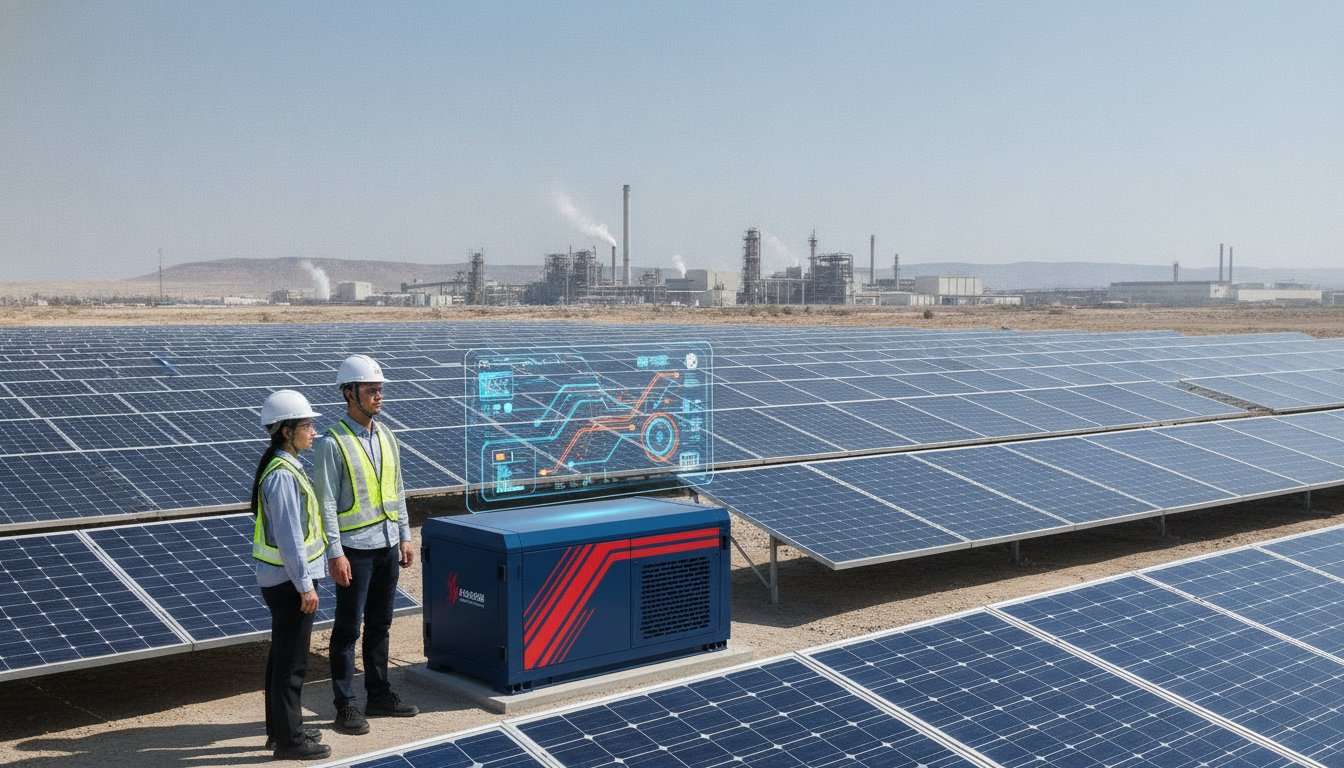
Can your remote operation afford to lose its share of the $4.5 billion that poor electricity access costs Pakistan's economy every year? For industrial leaders in the B3 and B4 categories, the reality of 2026 involves more than just navigating high tariffs; it's about surviving exorbitant "delivered" diesel costs and frequent component failures in 45°C heat. You've likely accepted that grid instability and load shedding are unavoidable taxes on your production output. However, the deployment of advanced industrial microgrid solutions pakistan is no longer a luxury for the few, but a strategic necessity for those seeking to decouple their operational success from a volatile national grid.
Nippon Energy engineers a resilient, diesel-free future by integrating high-efficiency HJT technology with AI-managed storage systems. By applying rigorous Japanese EPC standards, we transform energy from a fluctuating expense into a 25-year bankable asset that ensures 100% operational uptime. This guide details how to leverage 0% import duties on solar panels and advanced lithium-ion configurations to eliminate diesel dependency. We will explore the technical architecture required to maintain peak performance in extreme temperatures and provide a clear roadmap to achieving total energy autonomy within the current Pakistani regulatory landscape.
Key Takeaways
- Break free from the "diesel trap" and the logistical risks of fuel transport to secure your remote Sindh or Balochistan operations against grid instability.
- Learn why Nippon HJT panels outperform standard modules in Pakistan’s 40°C+ heat, ensuring consistent power generation during peak summer months.
- Understand how Smart AI Inverters and LFP storage systems manage high surge currents from industrial motors to prevent system trips and downtime.
- Implement robust protection against dust soiling and coastal corrosion to maximize the longevity of your power electronics and structural components.
- Leverage integrated industrial microgrid solutions pakistan to transform energy from a volatile expense into a 25-year, bankable asset through the NipponHev architecture.
The Strategic Shift: Why Pakistan's Industrial Sector is Adopting Off-Grid Microgrids
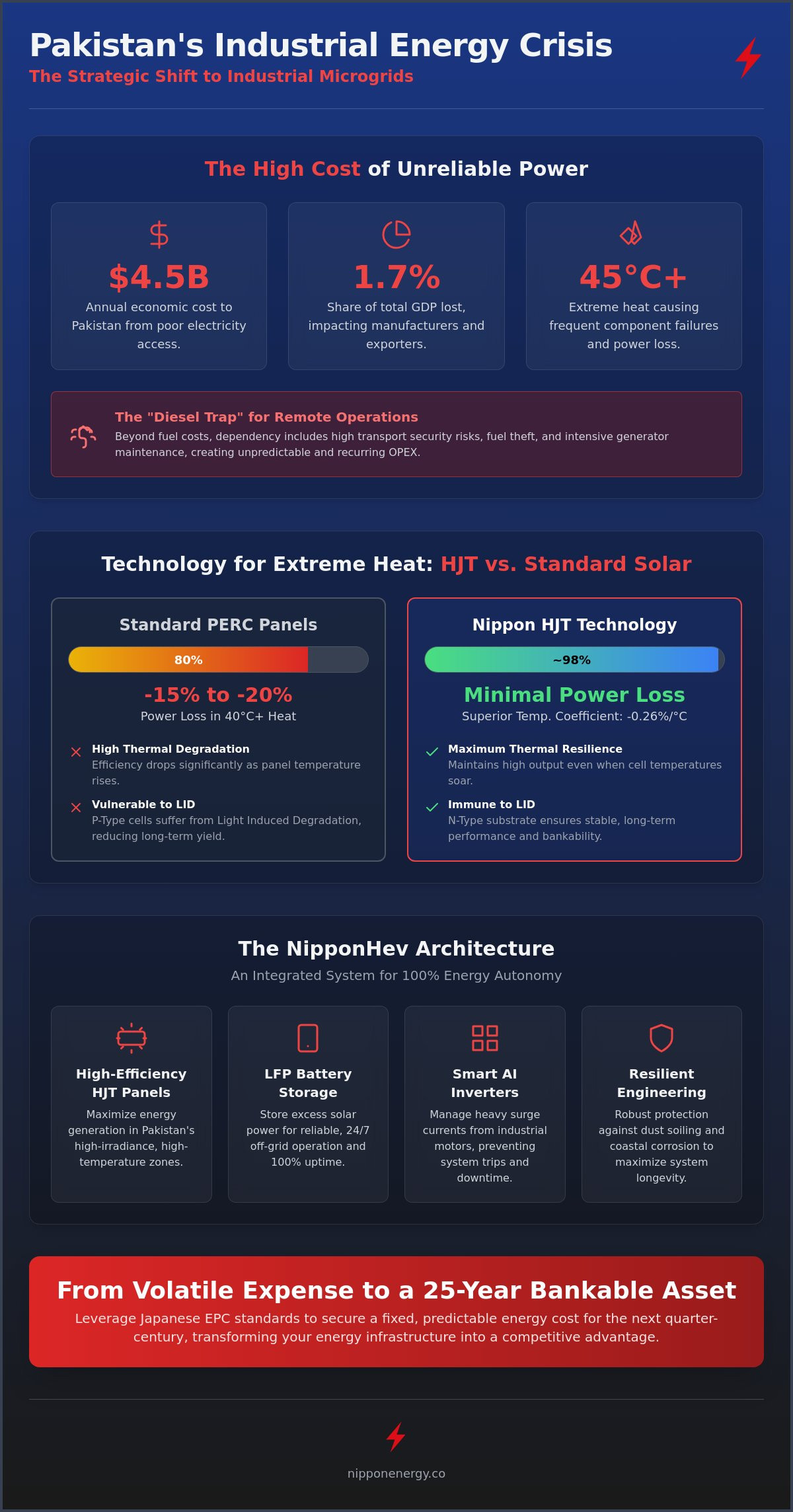
Pakistan's industrial landscape is undergoing a structural transformation. The World Bank estimates that poor electricity access costs the national economy $4.5 billion annually, a figure representing approximately 1.7% of the total GDP. For manufacturers operating in remote Sindh or the rugged terrains of Balochistan, this isn't just an abstract statistic; it's a daily operational barrier. High-tier industrial consumers are increasingly deploying industrial microgrid solutions pakistan to bypass a grid that often imposes an unjustified burden of tariffs while failing to provide the consistency required for modern manufacturing.
Calculating the True Cost of Diesel Dependency
Remote industrial sites have traditionally relied on diesel generators as their primary power source. However, the "Diesel Trap" involves more than just the fluctuating price of fuel. It encompasses the high cost of transport security through volatile regions, the persistent risk of fuel theft, and the intensive maintenance schedules required for aging generator fleets. Additionally, the environmental liability of diesel spills in sensitive industrial zones poses a growing risk to corporate compliance and local ecosystems. The transition from diesel to solar represents a fundamental shift from unpredictable, recurring OPEX to a stable, depreciable CAPEX that secures the next 25 years of production.
Industrial Microgrids vs. Standard Solar
It's essential to understand what a microgrid is in a professional context: a localized energy system that can operate independently of the main grid. Unlike standard grid-tied solar systems that shut down during load shedding, a true industrial microgrid integrates high-capacity storage and intelligent load management. By 2026, advancements in power electronics allow these systems to handle the heavy surge currents of massive industrial motors without system failure. This reliability makes 100% off-grid operation viable for heavy machinery, provided the system is designed with the technical precision found in professional solar epc services.
Global supply chains now demand rigorous ESG compliance. For Pakistani exporters, green manufacturing is no longer optional; it's a prerequisite for maintaining international trade partnerships. Implementing a robust microgrid ensures that your facility meets these stringent standards while achieving total energy autonomy. By decoupling production from volatile national grid pricing and unpredictable load-shedding schedules, you transform your energy infrastructure into a permanent competitive advantage.
Solar Technology for Extreme Heat: Selecting HJT and TOPCon for Pakistan
The efficiency of a solar array is not a static figure; it is a variable dictated by environmental stress. In the context of industrial microgrid solutions pakistan, the primary adversary is thermal degradation. Standard mono-PERC modules, while common, often experience a significant drop in power output when ambient temperatures exceed 40°C. To maintain 100% operational uptime in regions like Multan or Sukkur, the selection of cell architecture must prioritize N-type substrates, which are inherently immune to Light Induced Degradation (LID) and offer superior performance in high-irradiance zones.
N-type technology has become the new baseline for industrial projects, with topcon solar panels offering a significant efficiency boost over traditional P-type modules. However, for the most demanding environments, Heterojunction (HJT) technology is the gold standard. HJT is the fusion of crystalline silicon and thin-film technology for maximum thermal resilience. While standard panels may lose 15-20% of their rated yield in extreme heat, HJT modules maintain a much higher output due to a superior temperature coefficient, typically around -0.26%/°C. This technical edge ensures that your energy yield remains stable even when cell temperatures soar.
Thermal Stability and Asset Longevity
The long-term bankability of a microgrid depends on the degradation rate of its components. Nippon HJT modules are engineered for a 30-year asset life, significantly outperforming the 20-year cycle typical of PERC technology. This longevity is supported by Pakistan's renewable energy policy, which encourages the adoption of high-durability systems to meet national sustainability targets. By utilizing N-type substrates, these systems eliminate the risk of boron-oxygen defects, ensuring that the initial power rating remains consistent over decades of exposure to intense Pakistani sunlight.
Maximizing Power Density in Industrial Sites
Industrial facilities often face space constraints, making power density a critical design factor. Modules with 22.5%+ efficiency reduce the total land footprint and mounting infrastructure required for a given megawatt capacity. High-wattage Nippon modules allow for a reduction in Balance of System (BOS) costs, as fewer strings, combiners, and cables are needed to achieve the target output. Advanced busbar-less designs further enhance this efficiency by reducing internal resistance and minimizing shading on the cell surface. If you are planning a high-capacity installation, you can consult with our engineering team to optimize your site layout for maximum density.
Yield can be further enhanced through bifacial gain. In high-albedo environments such as salt flats or sandy industrial parks, bifacial modules capture reflected light from the underside, potentially increasing total yield by up to 30%. This dual-sided generation, combined with the low-light performance of N-type cells, ensures that your microgrid produces power earlier in the morning and later into the evening, reducing the strain on your battery storage systems.
Energy Orchestration: Lithium-Ion Storage and Smart AI Inverters
Raw power generation is only half of the equation for a truly autonomous facility. Within the technical framework of industrial microgrid solutions pakistan, the ability to store and intelligently distribute that energy determines the system's ultimate reliability. While solar panels act as the engine, it's the orchestration between high-density storage and intelligent inverters that ensures heavy industrial loads remain powered through the night or during sudden irradiance drops in the monsoon season. Modern energy architecture requires a shift from passive backup to active, AI-driven management.
Nippon Lithium-Ion vs. Traditional Storage
For decades, lead-acid batteries were the default choice for industrial backup. In 2026, they represent a financial trap for remote sites due to their limited cycle life and high maintenance requirements. Nippon Lithium-ion Battery Storage Systems utilize Lithium Iron Phosphate (LFP) chemistry, providing the industrial standard for safety and deep-cycle longevity in harsh climates. Unlike lead-acid, which requires regular watering and specialized ventilation, LFP is maintenance-free and offers a Depth of Discharge (DoD) of up to 90% without compromising cell integrity. Transitioning to a modern lithium ion battery storage architecture eliminates the logistical burden of servicing remote battery banks and offers a far superior round-trip efficiency, ensuring more of your generated power actually reaches your machinery.
AI Inverters: The Brain of the Remote Site
The inverter has evolved from a simple conversion tool into the intelligence center of the industrial site. Smart ai solar inverters use predictive analytics to harvest energy based on specific weather patterns in Punjab and Sindh. These systems are engineered to manage the high surge currents required to start heavy industrial motors, preventing the nuisance tripping that often plagues standard off-grid setups. By monitoring load profiles in real-time, the AI can prioritize critical production lines during periods of low solar output, ensuring that your most valuable processes never stop.
Remote operations in Balochistan or KPK benefit significantly from AI-driven remote troubleshooting. These systems identify potential component faults before they lead to a total shutdown, allowing for remote diagnostics and software-based fixes. This capability drastically reduces the need for expensive "fly-in" technicians. Integrated safety protocols like arc-fault protection and rapid shutdown are essential for hazardous industrial zones, providing a layer of security that traditional systems lack. The deployment of comprehensive industrial microgrid solutions pakistan relies on this synergy between robust LFP storage and the predictive power of AI to maintain a 25-year bankable energy asset.
Engineering for Resilience: Surviving Dust, Salt, and Storms
The environmental volatility of the Pakistani landscape presents a distinct set of engineering challenges that standard solar installations are not equipped to handle. For industrial microgrid solutions pakistan, the focus must extend beyond peak efficiency to encompass long-term structural and electrical survival. In arid regions, dust accumulation can reduce energy yield by up to 30% within weeks. Nippon Energy addresses this through the integration of automated dry-cleaning robots and hydrophobic coatings that prevent particulate bonding on the glass surface, ensuring consistent output without the water-intensive requirements of manual cleaning.
Structural integrity is equally critical in the coastal belt, where high wind loads and salt-laden air threaten the physical stability of the array. Our mounting systems are designed using high-tensile, hot-dip galvanized steel or specialized aluminum alloys that meet the aerodynamic requirements of Sindh’s wind corridors. Thermal management for battery enclosures also requires an active approach; we utilize climate-controlled housing for LFP storage to maintain cell temperatures below 30°C, even when ambient temperatures in the surrounding industrial park exceed 45°C. This proactive cooling prevents accelerated chemical degradation and preserves the 25-year asset life of the system.
Hardening Electronics Against Industrial Pollutants
Sensitive power electronics require protection from the high-particulate environments typical of cement, textile, and flour manufacturing. Nippon Smart AI Inverters and combiners carry IP66 ratings, providing a hermetic seal against dust ingress and high-pressure water jets. For coastal sites in Karachi or Port Qasim, every component must possess Salt Mist Corrosion Level 6 certification to prevent the rapid oxidation that leads to premature electrical failure. These rigorous standards ensure that the system remains operational in high-salinity zones where standard equipment would fail within five years.
Remote Monitoring and Performance Architecture
In the vast expanses of Balochistan, where cellular connectivity is often unreliable, we deploy satellite-linked monitoring systems to ensure continuous data transmission. This connectivity allows solar system maintenance to evolve from reactive troubleshooting to predictive performance architecture. By utilizing remote IR thermography, our engineers can identify thermal hotspots on specific cells before they escalate into module failures. This high-tech architectural approach minimizes the need for site visits and ensures that your remote operation maintains 100% uptime through every season. To secure your facility against these environmental risks, you can request a structural resilience audit for your site.
The Nippon Energy Advantage: Turnkey EPC for Industrial Autonomy
A frequent error in the procurement of industrial microgrid solutions pakistan is the piecemeal approach, where components are sourced from disparate vendors to minimize initial costs. This strategy often results in accountability gaps during system failures, as manufacturers may blame third-party integration issues. Nippon Energy eliminates this risk through unified EPC (Engineering, Procurement, and Construction) project development. We provide a single point of responsibility, ensuring that every component, from the structural mounting to the AI-managed storage, is engineered to work in total harmony. It isn't just about buying parts; it's about commissioning a high-performance power plant that functions as a single, cohesive unit.
Central to this integrated approach is the nipponhev system, an architecture specifically designed for maximum synergy between HJT panels and AI-managed storage. By bringing Japanese engineering standards to the Pakistani market, we ensure a level of precision that standard installers cannot match. Our systems are built with modular scalability in mind, allowing your energy infrastructure to grow alongside your industrial capacity. Whether you are expanding a textile mill in Faisalabad or a processing plant in Hub, the system architecture can be scaled without requiring a complete overhaul of the existing power electronics.
End-to-End Project Development
Our methodology begins long before the first panel is installed. We conduct exhaustive feasibility studies, including soil analysis for structural stability and 3D irradiance mapping to optimize yield in high-dust environments. Nippon Energy maintains a strong local footprint with expertise in Lahore and Karachi, backed by our Tokyo-based engineering team. This combination of local market knowledge and global technical authority allows us to manage everything from customs clearance of N-type modules to 24/7 remote O&M (Operations and Maintenance). We don't just deliver a system; we manage the entire lifecycle of your energy asset.
Securing Your Energy Future
The bankability of your energy project is determined by the reliability of the hardware and the reputation of the EPC partner. Nippon Energy’s use of high-tier HJT and TOPCon technology simplifies project financing for large-scale industrials by providing predictable, long-term performance guarantees. In a market where energy prices and grid stability are increasingly volatile, securing a 25-year bankable asset is the most effective way to future-proof your OPEX. Our localized technical support teams ensure that any maintenance requirements are addressed immediately, preserving the 100% uptime your production demands. To begin the transition to total energy independence, you should consult with Nippon Energy’s engineering team for a remote site feasibility study.
Securing Your Operational Future with High-Precision Energy Architecture
Transitioning to total energy autonomy is no longer a speculative venture; it's a fundamental requirement for industrial survival in a volatile market. By integrating proprietary HJT and TOPCon technology with AI-managed storage, manufacturers can finally decouple their production from the logistical risks of the "diesel trap" and the instability of the national grid. The deployment of comprehensive industrial microgrid solutions pakistan ensures that your facility maintains 100% operational uptime, even in the 45°C+ temperatures of Sindh and Punjab. These systems are engineered to withstand the harshest environmental stresses while delivering consistent, high-yield performance.
Nippon Energy brings world-class Japanese engineering standards to the local market, providing a single point of accountability for your entire energy architecture. We transform power from a recurring operational expense into a 25-year bankable asset, backed by AI-integrated energy management and localized technical support. This shift doesn't just lower your OPEX; it secures your position within global green supply chains. It's time to engineer a resilient, high-performance future for your remote operations.
Request a Technical Consultation for Your Industrial Site
Your journey toward permanent energy independence begins with a single, precision-engineered step.
Frequently Asked Questions
Can an industrial microgrid power heavy machinery and motors?
Yes, industrial microgrids are specifically engineered to handle the high inductive loads and surge currents required by heavy machinery and motors. By integrating Nippon Smart AI Inverters, the system provides the necessary torque and current buffer to prevent voltage dips during motor startup. This intelligent load management ensures that large-scale industrial equipment operates with the same stability as it would on a robust national grid.
How long do Nippon lithium-ion batteries last in Pakistan's extreme heat?
Nippon Lithium-ion Battery Storage Systems are designed for a cycle life of 6,000 plus cycles, which typically equates to 10 to 15 years of operational service. In Pakistan's extreme heat, we utilize active thermal management and climate-controlled enclosures to maintain cell temperatures below 30°C. This proactive cooling prevents the accelerated chemical degradation common in standard storage solutions, ensuring your energy asset maintains its capacity throughout its projected lifespan.
What is the typical ROI for an industrial solar microgrid in Pakistan?
The typical Return on Investment (ROI) for an industrial microgrid in Pakistan ranges from 3 to 5 years, depending on your baseline diesel consumption and grid tariff category. By eliminating exorbitant "delivered" diesel costs and avoiding B3 and B4 industrial tariff surcharges, the system pays for itself through immediate OPEX reduction. After the payback period, the microgrid functions as a high-yield energy asset for the remainder of its 25-year service life.
Is HJT or TOPCon better for high-dust environments like Faisalabad?
Nippon HJT Solar Panels are the superior choice for high-dust and high-temperature environments like Faisalabad due to their lower temperature coefficient and bifacial capability. While TOPCon is a robust baseline, HJT technology maintains higher yields when panels are partially obscured by fine particulate matter. When paired with automated dry-cleaning systems, HJT modules provide the most resilient energy generation for industrial microgrid solutions pakistan in arid industrial zones.
How do you maintain solar panels in remote areas without local staff?
Maintenance in remote areas is managed through a combination of automated cleaning robots and satellite-linked performance monitoring. These systems eliminate the need for permanent on-site staff by providing real-time data on soiling levels and electrical performance. If the system detects a drop in yield, the automated cleaning cycle is triggered, while our engineers in Lahore or Karachi perform remote diagnostics to ensure continuous operational uptime.
Does Nippon Energy provide turnkey EPC services in Karachi and Lahore?
Yes, Nippon Energy provides comprehensive turnkey EPC services across Pakistan, with dedicated project teams based in Karachi and Lahore. Our scope of work covers everything from initial soil analysis and feasibility studies to the installation of NipponHev integrated architectures. This single-source accountability ensures that your project adheres to Japanese engineering standards while navigating the specific regulatory and logistical requirements of industrial microgrid solutions pakistan.
Can existing diesel generators be integrated into a new solar microgrid?
Existing diesel generators can be seamlessly integrated into a hybrid microgrid architecture to serve as a secondary or emergency backup. Our Smart AI Inverters synchronize with the generator's output to provide a smooth transition during periods of exceptionally low solar irradiance or extended battery discharge. This configuration allows you to retain your existing infrastructure while drastically reducing your annual diesel consumption and overall carbon footprint.
What happens during consecutive cloudy days in the monsoon season?
During periods of low irradiance, such as the monsoon season, the system relies on Nippon Lithium-ion Battery Storage Systems and AI-driven load prioritization. The intelligent controller monitors battery state-of-charge and automatically directs power to critical production lines while temporarily shedding non-essential loads. This ensures that your most valuable industrial processes remain uninterrupted even when solar generation is significantly reduced for several consecutive days.


