
A single hour of ventilation failure during a 45°C heatwave can liquidate an entire flock's value, instantly turning a poultry farm's profit into a catastrophic loss. You understand that relying on an unstable national grid and skyrocketing diesel costs is no longer a viable strategy for commercial scale operations. Implementing solar power for poultry farms in pakistan has evolved from a simple cost-saving measure into a critical infrastructure requirement for long-term survival. As of 2026, the transition to net-billing and the increasing intensity of local heatwaves demand a more sophisticated approach than standard rooftop installations.
This guide demonstrates how to maximize your poultry farm's ROI using climate-resilient HJT technology, smart AI energy management, and integrated lithium-ion storage solutions designed specifically for Pakistan's extreme thermal conditions. You'll learn how to achieve 24/7 energy independence and protect your livestock with infrastructure built to last over 25 years. We provide a methodical breakdown of the latest NEPRA regulations, the technical superiority of heterojunction modules, and the strategic deployment of AI-driven inverters to ensure your ventilation systems never fail.
Key Takeaways
- Understand how HJT technology maintains operational efficiency in 45°C+ environments by utilizing superior temperature coefficients to prevent thermal degradation.
- Evaluate the technical advantages of lithium-ion storage over traditional lead-acid systems for maintaining critical ventilation and automated feeding cycles during grid instability.
- Analyze the financial impact of solar power for poultry farms in pakistan, where high-efficiency hardware and smart AI orchestration can significantly shorten the payback period.
- Identify essential site engineering protocols, including wind load assessments and surge protection, required to ensure infrastructure durability in demanding agricultural zones.
- Learn to mitigate the performance risks of soiling and dust through structured maintenance plans that preserve energy yield over a 25-year lifecycle.
Strategic Solar Power for Poultry Farms in Pakistan
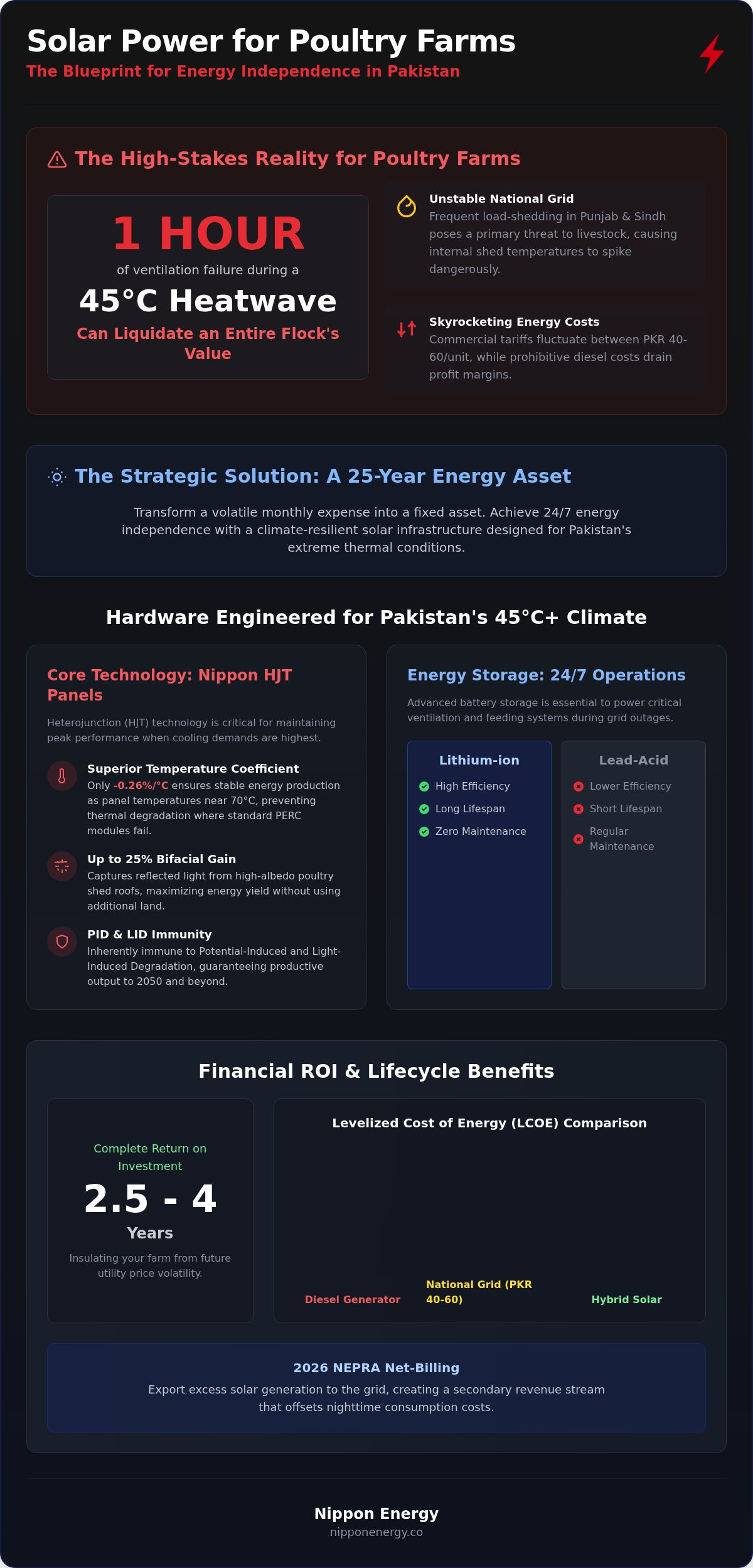
The 2026 energy landscape for the poultry sector is defined by extreme volatility. National average tariffs have reached PKR 33.38 per unit, while commercial retail rates from LESCO and K-Electric often fluctuate between PKR 40 and PKR 60. For a high-density poultry shed, these costs represent a massive drain on profit margins. Integrating the solar power landscape in Pakistan into agricultural operations isn't merely an environmental choice; it's a structural necessity for biological safety.
In commercial poultry, energy functions as a life support system. A failure in ventilation for even thirty minutes during a Punjab heatwave can lead to total flock mortality. By deploying solar power for poultry farms in pakistan, operators transform their energy profile from a volatile monthly expense into a 25-year fixed asset. This shift facilitates the rise of "Smart Poultry Farms," where AI-driven infrastructure manages cooling loads with surgical precision. The adoption of solar power for poultry farms in pakistan has transitioned from a luxury to a baseline requirement for commercial viability.
Countering Grid Instability and Rising Tariffs
Load-shedding in rural Sindh and Punjab remains a primary threat to livestock health. When the grid fails, internal temperatures in tunnel-ventilated sheds spike rapidly. Farmers are moving away from a traditional consumer mindset, where they are at the mercy of DISCOs, toward an energy-producer model. Under the new 2026 NEPRA regulations, net-billing allows farms to export excess generation during peak sunlight hours at the National Average Energy Purchase Price, creating a secondary revenue stream that helps offset expensive nighttime consumption from the grid.
Diesel Displacement: The ROI of Hybrid Solar Systems
Diesel generators face prohibitive operational costs due to global fuel price adjustments and monthly fuel charges adjustments. The Levelized Cost of Energy (LCOE) for solar is now significantly lower than diesel-based generation in 2026. Hybrid systems, which combine PV panels with Nippon Lithium-ion Battery Storage Systems, have become the standard for large-scale sheds because they provide seamless power transitions during grid outages. Achieving energy autonomy through a dedicated hybrid solar system typically yields a complete return on investment within 2.5 to 4 years, effectively insulating the farm from future utility price volatility.
Hardware Selection: HJT and TOPCon for Extreme Thermal Environments
In the high-velocity heat of Pakistan, the temperature coefficient is the single most critical metric for solar performance. Ambient temperatures in regions like Multan or Sukkur frequently exceed 45°C, causing solar panel surface temperatures to climb toward 70°C. Standard PERC modules suffer significant thermal degradation under these conditions, often losing up to 15% more power than advanced N-type technologies. Heterojunction (HJT) modules maintain a superior temperature coefficient of approximately -0.26%/°C, ensuring that energy production remains stable when the farm's cooling demands are at their peak.
Bifacial gain offers a strategic advantage for solar power for poultry farms in pakistan. Most modern poultry sheds utilize reflective silver or white roofing materials that possess high albedo. Nippon HJT panels capture reflected light from the rear side, which can increase total energy yield by up to 25% without requiring additional land. For remote rural installations, dust resilience is equally vital. Nippon modules feature advanced anti-soiling coatings that prevent particulate adhesion, mitigating the 30% yield loss typically associated with the heavy dust loads of agricultural zones.
Nippon HJT vs. TOPCon: Technical Performance Analysis
While topcon solar panels provide a highly efficient and cost-effective leap over traditional P-type technology, Nippon HJT remains the "High-Tech Architect" choice for the extreme thermal corridors of Southern Punjab and Sindh. The HJT structure is inherently immune to Potential-Induced Degradation (PID) and Light-Induced Degradation (LID). This structural integrity ensures the farm remains productive through 2050, with a guaranteed power output that far outlasts standard industry alternatives. It's a long-term engineering solution for a 25-year fixed-asset benefit.
Optimizing Inverter Intelligence for Variable Loads
Precision energy orchestration requires a smart ai solar inverter capable of managing the high-torque surges of tunnel ventilation fans and automated feeders. Nippon Smart AI Inverters utilize predictive algorithms to stabilize voltage during these heavy load transitions, preventing system trips that could endanger livestock. Integrated remote monitoring allows owners to supervise energy flows from corporate offices in Lahore or Karachi. These systems employ AI-driven predictive maintenance to identify potential issues before they cause downtime during critical summer months. To optimize your facility's thermal resilience, evaluate our high-performance solar hardware configurations designed for the Pakistani climate.
Ensuring 24/7 Operations with Advanced Battery Storage
Nighttime energy stability is the final barrier to achieving total energy independence for commercial sheds. While PV modules generate peak power during daylight hours, poultry operations require continuous ventilation and automated feeding throughout the night. Implementing solar power for poultry farms in pakistan without a robust storage strategy leaves livestock vulnerable to the frequent load-shedding that characterizes the rural grid. By integrating storage with the nipponhev system, farmers ensure a seamless transition between energy sources, preventing the catastrophic ventilation failures that occur during sudden grid drops.
Precision sizing is essential to balance capital expenditure with operational security. We recommend categorizing farm loads into "Critical Load" (fans, feeders, and sensors) and "Total Load" (lighting and secondary equipment). Sophisticated energy architecture prioritizes the critical systems, ensuring that even during extended outages, the biological needs of the flock are met. This methodical approach to solar power for poultry farms in pakistan maximizes the utility of every kilowatt-hour stored, providing a reliable safety net that diesel generators simply cannot match in terms of response time or cost efficiency.
Lithium-Ion vs. Lead-Acid: The Lifecycle Cost Comparison
Commercial energy architecture in 2026 has shifted decisively toward lithium ion battery storage due to its superior cycle life and depth of discharge (DoD). While lead-acid batteries appear cheaper initially, they typically support only 500 to 1,000 cycles at 50% DoD. In contrast, lithium-ion systems provide over 6,000 cycles at 90% DoD. This means a lead-acid bank requires replacement every two years in the harsh Pakistani climate, eventually costing three times more than a single lithium-ion installation over a ten-year horizon. Advanced thermal management in lithium systems also ensures safety in high-temperature sheds where lead-acid cells often suffer from plate sulfation and early failure.
Powering Cold Storage and Processing
Surplus solar energy generated during peak hours can be diverted to high-demand units like milk chillers or meat processing cold storage. Using battery power for load shifting allows operators to avoid the highest retail grid tariffs, which can reach 0.14 to 0.22 USD per unit during peak evening hours. This strategy transforms the battery room into a profit-protection center. To maintain the structural integrity of these systems in rural environments, battery rooms must be designed with dust-filtration and active cooling. This ensures that sensitive power electronics remain within optimal operating parameters, securing your infrastructure investment for decades.
Implementation Guide: Professional EPC and Site Engineering
Precision engineering acts as the bridge between high-performance hardware and operational reality. For commercial poultry operators, site feasibility begins with a rigorous analysis of shed orientation and structural load capacity. Most tunnel-ventilated sheds in Pakistan are oriented East-West to minimize solar gain on side walls, which influences whether a roof-mount or ground-mount array is more efficient. High-velocity wind loads, particularly on the expansive roof surfaces of modern sheds, require specialized mounting structures that prevent uplift during severe weather events. Without methodical site engineering, even the most expensive modules cannot deliver their rated performance.
Electrical safety is paramount in the high-moisture, ammonia-rich environments typical of agricultural zones. These conditions are highly corrosive to standard electrical components, necessitating the use of specialized conduits and IP65-rated enclosures. Amateur installations often bypass critical grounding and surge protection protocols, creating significant fire hazards and risks of equipment failure. A professional commissioning process follows a strict protocol, including string testing, thermal imaging of connections, and inverter synchronization, to ensure the system integrates safely with existing farm infrastructure. Professional solar epc services provide the technical oversight required to mitigate these risks and secure your long-term yield.
Engineering for the Punjab and Sindh Landscape
Designing for the Pakistani landscape requires accounting for regional environmental stressors. In Punjab and Sindh, mounting structures must be engineered to withstand monsoon-force winds and frequent dust storms. If you're deploying ground-mounted arrays on land adjacent to sugarcane or rice crops, soil testing is mandatory to determine the correct foundation depth for steel piers. These agricultural soils often have high moisture retention, which can lead to structural shifting if not properly anchored. Precision engineering ensures that your infrastructure remains stable and productive regardless of soil type or seasonal weather shifts. For a comprehensive evaluation of your facility's structural readiness, request a technical site audit from our engineering team.
Net-Metering and Regulatory Compliance
Navigating the 2026 NEPRA regulatory framework is a critical step in the implementation of solar power for poultry farms in pakistan. The transition to net-billing requires a specific application process through local DISCOs such as GEPCO, FESCO, or MEPCO. This process involves technical vetting of the inverter's anti-islanding capabilities and the installation of a bi-directional meter. Synchronizing your production with the grid allows you to maximize credit generation during the cooler winter months, which can then be used to offset the heavy energy consumption of summer cooling cycles. Maintaining strict compliance with these regional grid requirements ensures that your farm remains a recognized prosumer with protected energy export rights.
Financial ROI and Lifecycle Maintenance for Poultry Farmers
The financial viability of solar power for poultry farms in pakistan is primarily driven by the displacement of expensive diesel generation and high-tariff grid consumption. While the initial capital expenditure for high-efficiency N-type hardware is higher than standard modules, the reduction in Levelized Cost of Energy (LCOE) creates a more favorable long-term balance sheet. Most commercial poultry operations in Punjab and Sindh report a payback period between 2.5 and 4 years. This rapid return is accelerated by the 2026 net-billing policy, where excess energy is sold back to the grid at the National Average Energy Purchase Price, effectively turning the shed roof into a revenue-generating asset.
Dust accumulation represents the most significant "hidden cost" for rural agricultural arrays. In the arid corridors of Pakistan, soiling can reduce energy yield by as much as 30% if left unmanaged. This performance drop often occurs during peak summer months when the farm's cooling demand is at its highest. Nippon Energy’s maintenance model for remote sites prioritizes consistent yield through structured cleaning protocols and hardware inspections. By treating solar infrastructure as a precision instrument rather than a "set and forget" installation, farmers protect their biological assets and their financial margins.
A recent 100kW HJT installation for a Sahiwal-based poultry estate serves as a benchmark for regional performance. By utilizing Nippon HJT modules, the estate managed to slash its monthly electricity overheads by approximately 70%. This specific project utilized the superior temperature coefficient of HJT to maintain stable output during a 47°C heatwave, a scenario where traditional PERC panels would've experienced significant power clipping. The estate now operates with a predictable energy cost, insulating the business from the frequent fuel price adjustments that plague diesel-dependent competitors.
Maximizing Yield through Performance Monitoring
Effective solar system maintenance in dusty agricultural zones requires more than just manual washing. We implement AI-driven monitoring systems that analyze real-time production data to detect shading or panel defects before they impact flock safety. In large-scale sheds, automated cleaning solutions often provide better efficiency gains than manual labor by ensuring consistent water pressure and frequency. These systems prevent the "hot spots" caused by uneven dust distribution, which can permanently damage cell strings and void hardware warranties.
Securing Your Agricultural Investment
2026 is the pivotal year for energy independence in Pakistan’s poultry sector. With grid tariffs continuing to climb, the long-term value of Japanese-engineered HJT and TOPCon technology becomes undeniable. These systems aren't just energy sources; they're the structural foundation of a modern, climate-resilient agribusiness. Investing in high-performance architecture ensures that your farm remains competitive for the next 25 years. To begin your transition toward energy autonomy, request a specialized energy audit from the Nippon Energy technical team today.
Securing the Next 25 Years of Poultry Production
Transitioning to solar power for poultry farms in pakistan is no longer a peripheral strategy; it's the core requirement for operational survival in a high-tariff, extreme-heat environment. You've seen how Japanese-engineered HJT technology and Nippon Smart AI energy management provide the technical resilience needed to withstand 45°C+ heatwaves while maintaining 24/7 operational security. By integrating advanced storage and professional turnkey EPC services, your farm achieves a level of energy autonomy that diesel generators cannot match.
This strategic investment secures your infrastructure for the next 25 years, insulating your business from grid instability and rising fuel costs. It's time to move beyond standard solar and embrace a high-performance energy architecture designed for the specific demands of the Pakistani agricultural sector. Request a Specialized Agricultural Solar Audit from Nippon Energy to begin your transition toward energy autonomy. Your flock's safety and your farm's ROI deserve nothing less than precision engineering.
Frequently Asked Questions
How much can a poultry farm save by switching to solar power in Pakistan?
Poultry farmers in Pakistan can reduce their monthly electricity expenditure by 70% to 80% through the strategic deployment of solar energy. By displacing expensive grid tariffs and reducing reliance on high-cost diesel backup, an integrated system significantly lowers the total cost of production. These savings are particularly evident during peak summer months when cooling loads are highest. Transitioning to solar power for poultry farms in pakistan turns a recurring monthly liability into a predictable, long-term asset.
Can solar power run a poultry shed 24/7 without the grid?
A poultry shed can operate 24/7 independently of the grid by utilizing a hybrid solar system integrated with Nippon Lithium-ion Battery Storage Systems. These systems capture surplus energy during daylight hours to power critical ventilation and automated feeding systems throughout the night. While total off-grid operation is technically possible, most commercial farms maintain a grid connection for net-billing purposes while relying on their battery banks for seamless power during frequent load-shedding events.
Which solar panel technology is best for the high heat of Southern Punjab?
Heterojunction (HJT) technology is the most resilient choice for the extreme thermal environments of Southern Punjab. Unlike standard panels that suffer significant power loss above 40°C, Nippon HJT modules feature a superior temperature coefficient that maintains high energy yields in intense heat. This technology combines crystalline silicon with thin-film layers to prevent thermal degradation, ensuring that your cooling systems remain fully powered during the most severe heatwaves without sacrificing hardware longevity.
What is the average payback period for a 50kW solar system on a farm?
The average payback period for a 50kW commercial solar installation typically ranges between 2.5 and 4 years. This timeframe depends on your farm's specific energy profile, the current retail electricity tariffs, and the displacement of diesel generator usage. Given that the system is engineered to last for 25 years, the remaining two decades represent a period of near-zero energy costs. High-efficiency hardware accelerates this return by maximizing kilowatt-hour production per square foot of shed roofing.
How do I apply for the Punjab government agricultural solar subsidy in 2026?
In 2026, agricultural solar initiatives are primarily facilitated through dedicated financing schemes rather than direct cash subsidies. Financial institutions offer specialized loans for renewable energy infrastructure with repayment tenors of up to 10 years and limits reaching approximately $72,000 depending on the bank's criteria. We recommend consulting with your local agricultural department or a qualified EPC provider to navigate the specific eligibility requirements for current provincial green energy programs and interest-rate support initiatives.
Does dust significantly affect solar panel performance on poultry farms?
Dust accumulation is a major performance risk in agricultural zones, potentially reducing energy yield by up to 30% without a structured maintenance plan. High particulate levels from nearby fields and feed processing can create a soiling effect that blocks sunlight from reaching the solar cells. Nippon modules utilize advanced anti-soiling coatings to minimize this adhesion, but regular cleaning remains essential. Implementing solar power for poultry farms in pakistan requires addressing these environmental factors to maintain optimal energy production.
How long do Nippon HJT solar panels last in agricultural settings?
Nippon HJT solar panels are engineered for a service life exceeding 25 years in demanding agricultural environments. Their N-type silicon architecture is inherently resistant to Potential-Induced Degradation (PID) and Light-Induced Degradation (LID), which are common causes of failure in standard modules. The dual-glass construction provides additional protection against the corrosive ammonia vapors typically found near poultry sheds. This structural integrity ensures the system continues to deliver high power output long after the initial investment has been recovered.
What maintenance is required for a commercial solar poultry installation?
Commercial solar installations require a methodical maintenance schedule focused on cleaning and technical audits. This includes bi-weekly panel washing to remove dust, periodic thermal imaging of electrical connections to prevent hot spots, and monitoring inverter performance via Nippon Smart AI software. Proactive maintenance ensures that the system operates at peak efficiency and prevents minor issues from escalating into operational downtime. Our maintenance and monitoring services provide the technical oversight necessary to secure your farm's 24/7 energy independence.


